Political contribution deductions require genuine transactions; banking records and party registration alone cannot defeat evidence of accommodation e...
Post-death GST liability permits fresh proceedings against legal representatives, while discontinued-business recovery remains limited to the inherite...
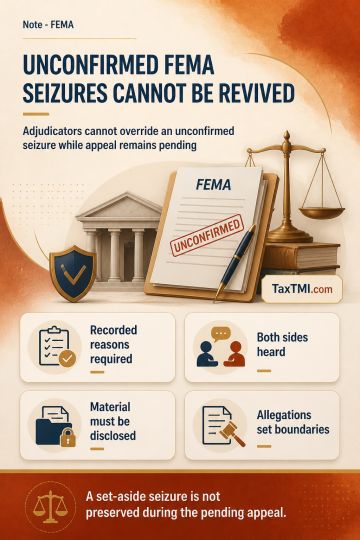
Non-confirmation of FEMA seizure prevents adjudicators from overriding pending appellate findings on recorded reasons and suspected foreign asset hold...
The HC dismissed criminal charges under Sections 276C(1)(i), 276D, and 277(1) of the IT Act against the petitioner, finding the prosecution relied solely on unauthenticated documents received indirectly from a foreign government under DTAA, which lacked evidentiary value. The ITAT had earlier set aside the reassessment orders due to absence of incriminating material. No prima facie evidence linked the petitioner to undisclosed foreign bank accounts or income concealment. The court held that mere presence of the petitioner's name in such documents does not shift the burden of proof. Non-signing of the Consent Waiver Form, already penalized under Section 271, cannot independently sustain criminal proceedings. Thus, the prosecution failed to establish the essential ingredients of willful tax evasion or falsification of records, rendering the initiation of criminal proceedings unsustainable.
The HC dismissed criminal charges under Sections 276C(1)(i), 276D, and 277(1) of the IT Act against the petitioner, finding the prosecution relied solely on unauthenticated documents received indirectly from a foreign government under DTAA, which lacked evidentiary value. The ITAT had earlier set aside the reassessment orders due to absence of incriminating material. No prima facie evidence linked the petitioner to undisclosed foreign bank accounts or income concealment. The court held that mere presence of the petitioner's name in such documents does not shift the burden of proof. Non-signing of the Consent Waiver Form, already penalized under Section 271, cannot independently sustain criminal proceedings. Thus, the prosecution failed to establish the essential ingredients of willful tax evasion or falsification of records, rendering the initiation of criminal proceedings unsustainable.
Note: It is a system-generated summary and is for quick reference only.
 TaxTMI
  TaxTMI