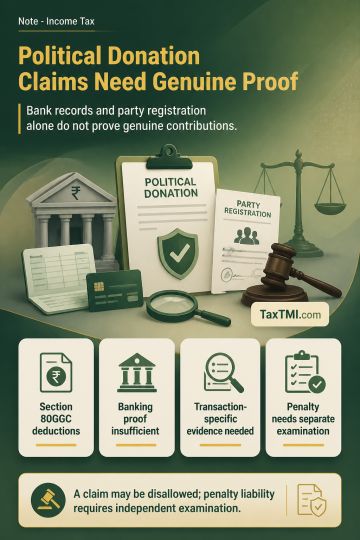
Political contribution deductions require genuine transactions; banking records and party registration alone cannot defeat evidence of accommodation e...
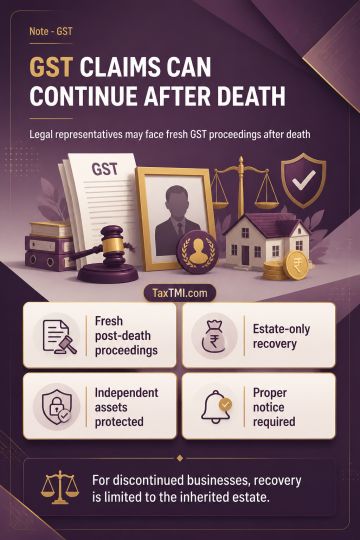
Post-death GST liability permits fresh proceedings against legal representatives, while discontinued-business recovery remains limited to the inherite...
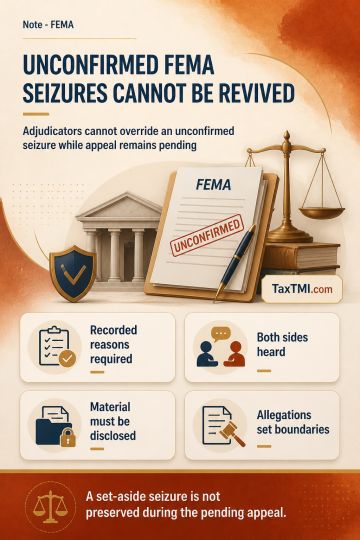
Non-confirmation of FEMA seizure prevents adjudicators from overriding pending appellate findings on recorded reasons and suspected foreign asset hold...
The HC held that the penalty proceedings under s. 271(1)(b) and prosecution under s. 276CC arise from distinct statutory defaults and the quashing of penalty under s. 271(1)(b) does not extinguish criminal liability under s. 276CC. However, criminal liability under s. 276CC requires proof of wilful default, an essential element of mens rea. The reverse burden under s. 278E shifts the onus to the accused to disprove wilfulness beyond reasonable doubt. In this case, the Respondent successfully rebutted the presumption, demonstrating that the failure to file returns in response to the s. 153A notice was not wilful. Consequently, despite the erroneous legal reasoning by the Appellate Court, the acquittal was upheld on the valid ground of absence of wilful default, thereby negating criminal culpability under s. 276CC.
The HC held that the penalty proceedings under s. 271(1)(b) and prosecution under s. 276CC arise from distinct statutory defaults and the quashing of penalty under s. 271(1)(b) does not extinguish criminal liability under s. 276CC. However, criminal liability under s. 276CC requires proof of wilful default, an essential element of mens rea. The reverse burden under s. 278E shifts the onus to the accused to disprove wilfulness beyond reasonable doubt. In this case, the Respondent successfully rebutted the presumption, demonstrating that the failure to file returns in response to the s. 153A notice was not wilful. Consequently, despite the erroneous legal reasoning by the Appellate Court, the acquittal was upheld on the valid ground of absence of wilful default, thereby negating criminal culpability under s. 276CC.
Note: It is a system-generated summary and is for quick reference only.
 TaxTMI
  TaxTMI