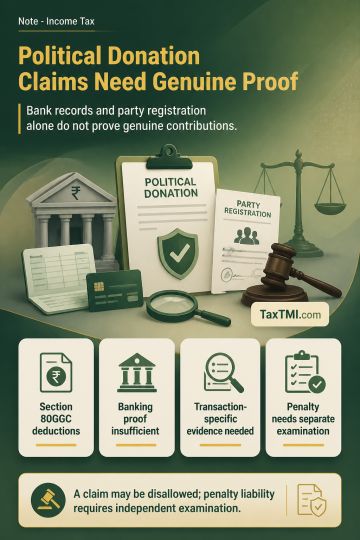
Political contribution deductions require genuine transactions; banking records and party registration alone cannot defeat evidence of accommodation e...
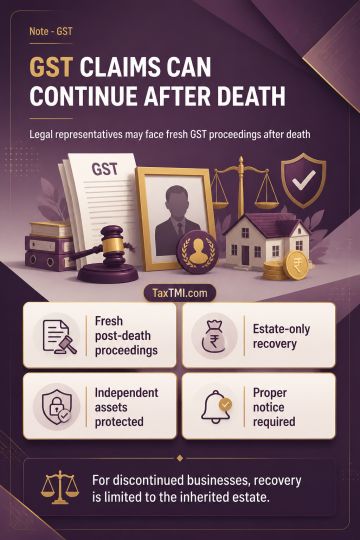
Post-death GST liability permits fresh proceedings against legal representatives, while discontinued-business recovery remains limited to the inherite...
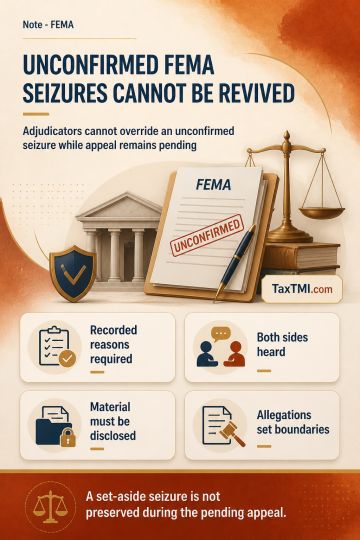
Non-confirmation of FEMA seizure prevents adjudicators from overriding pending appellate findings on recorded reasons and suspected foreign asset hold...
The CESTAT held that electricity generated by the appellant constitutes "excisable goods" under Section 2(d) of the Central Excise Act, 1944, as it is specified in the Central Excise Tariff Act, 1985 (Tariff Item No. 2716 0000) and is marketable. Despite the absence of a prescribed excise duty rate for electricity, it qualifies as excisable goods. Regarding the levy of service tax, the Tribunal distinguished the transaction as a contract of sale rather than a service contract. Following precedent affirmed by the Supreme Court, it was held that no service tax is leviable on the sale of electricity. Consequently, the impugned order demanding service tax was set aside, and the appeal was allowed in favor of the appellant.
The CESTAT held that electricity generated by the appellant constitutes "excisable goods" under Section 2(d) of the Central Excise Act, 1944, as it is specified in the Central Excise Tariff Act, 1985 (Tariff Item No. 2716 0000) and is marketable. Despite the absence of a prescribed excise duty rate for electricity, it qualifies as excisable goods. Regarding the levy of service tax, the Tribunal distinguished the transaction as a contract of sale rather than a service contract. Following precedent affirmed by the Supreme Court, it was held that no service tax is leviable on the sale of electricity. Consequently, the impugned order demanding service tax was set aside, and the appeal was allowed in favor of the appellant.
Note: It is a system-generated summary and is for quick reference only.
 TaxTMI
  TaxTMI