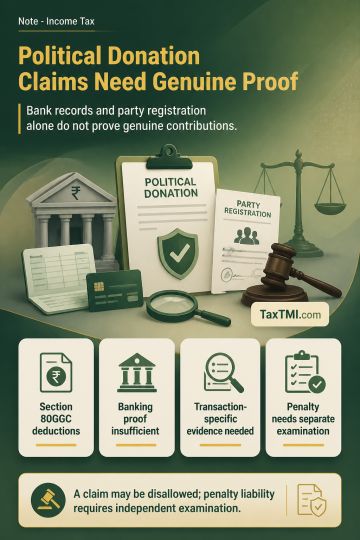
Political contribution deductions require genuine transactions; banking records and party registration alone cannot defeat evidence of accommodation e...
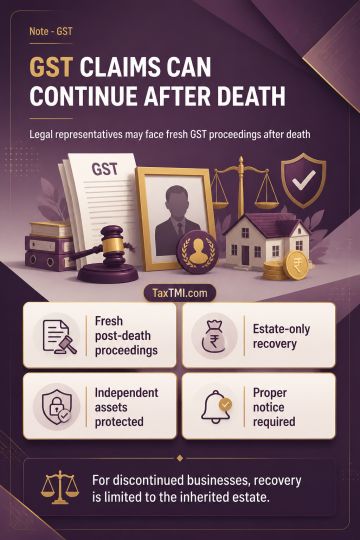
Post-death GST liability permits fresh proceedings against legal representatives, while discontinued-business recovery remains limited to the inherite...
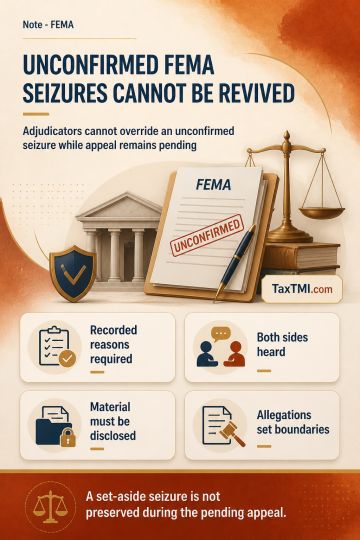
Non-confirmation of FEMA seizure prevents adjudicators from overriding pending appellate findings on recorded reasons and suspected foreign asset hold...
Clause 447 of the Income Tax Bill, 2025 imposes a fixed penalty of one lakh rupees for failure to furnish an accountant's report as required under section 172, empowering the Assessing Officer to impose the penalty at their discretion. This provision closely parallels Section 271BA of the Income-tax Act, 1961, which addresses similar non-compliance under section 92E related to transfer pricing. Both provisions aim to enforce statutory reporting obligations, promote transparency, and deter non-compliance through a uniform penalty. However, Clause 447 does not explicitly provide for a reasonable cause exception or procedural safeguards such as show-cause notices, potentially raising fairness concerns. The scope of section 172 will determine the breadth of Clause 447's application, and potential overlaps with existing provisions may require clarification. The clause underscores increased compliance responsibilities for taxpayers and accountants while serving as a streamlined enforcement tool for tax authorities.
Clause 447 of the Income Tax Bill, 2025 imposes a fixed penalty of one lakh rupees for failure to furnish an accountant's report as required under section 172, empowering the Assessing Officer to impose the penalty at their discretion. This provision closely parallels Section 271BA of the Income-tax Act, 1961, which addresses similar non-compliance under section 92E related to transfer pricing. Both provisions aim to enforce statutory reporting obligations, promote transparency, and deter non-compliance through a uniform penalty. However, Clause 447 does not explicitly provide for a reasonable cause exception or procedural safeguards such as show-cause notices, potentially raising fairness concerns. The scope of section 172 will determine the breadth of Clause 447's application, and potential overlaps with existing provisions may require clarification. The clause underscores increased compliance responsibilities for taxpayers and accountants while serving as a streamlined enforcement tool for tax authorities.
Note: It is a system-generated summary and is for quick reference only.
 TaxTMI
  TaxTMI