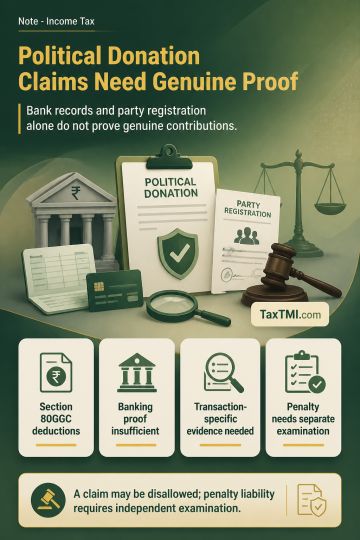
Political contribution deductions require genuine transactions; banking records and party registration alone cannot defeat evidence of accommodation e...
Post-death GST liability permits fresh proceedings against legal representatives, while discontinued-business recovery remains limited to the inherite...
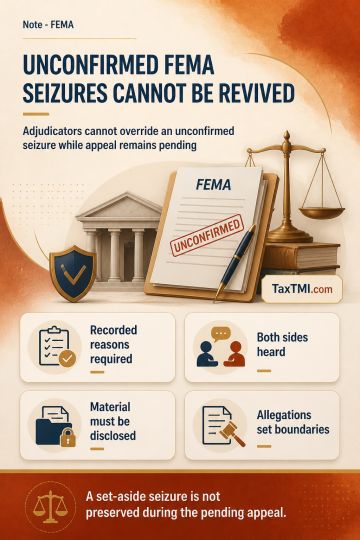
Non-confirmation of FEMA seizure prevents adjudicators from overriding pending appellate findings on recorded reasons and suspected foreign asset hold...
Clause 442 of the Income Tax Bill, 2025, mirrors Section 271AA of the Income-tax Act, 1961, by imposing penalties for failure to maintain, report, or furnish accurate documentation related to international and specified domestic transactions. It prescribes a 2% penalty on the transaction value for defaults such as non-maintenance, non-reporting, or incorrect information, and a flat penalty of five lakh rupees for failure to furnish required information. While the substantive obligations and penalty amounts remain consistent with the earlier provision, Clause 442 omits the "without prejudice" clause allowing concurrent penalties under other sections, potentially limiting multiple penalties. The provision enhances compliance enforcement but raises interpretative issues regarding reasonable cause defenses, proportionality of penalties, and applicability to ongoing cases. Taxpayers must ensure rigorous documentation and reporting to avoid significant penalties, while authorities retain strong enforcement powers under the updated statutory framework.
Clause 442 of the Income Tax Bill, 2025, mirrors Section 271AA of the Income-tax Act, 1961, by imposing penalties for failure to maintain, report, or furnish accurate documentation related to international and specified domestic transactions. It prescribes a 2% penalty on the transaction value for defaults such as non-maintenance, non-reporting, or incorrect information, and a flat penalty of five lakh rupees for failure to furnish required information. While the substantive obligations and penalty amounts remain consistent with the earlier provision, Clause 442 omits the "without prejudice" clause allowing concurrent penalties under other sections, potentially limiting multiple penalties. The provision enhances compliance enforcement but raises interpretative issues regarding reasonable cause defenses, proportionality of penalties, and applicability to ongoing cases. Taxpayers must ensure rigorous documentation and reporting to avoid significant penalties, while authorities retain strong enforcement powers under the updated statutory framework.
Note: It is a system-generated summary and is for quick reference only.
 TaxTMI
  TaxTMI