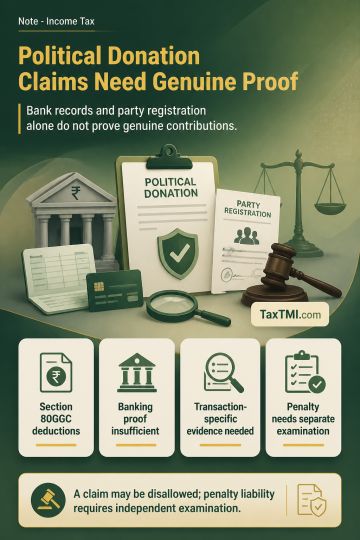
Political contribution deductions require genuine transactions; banking records and party registration alone cannot defeat evidence of accommodation e...
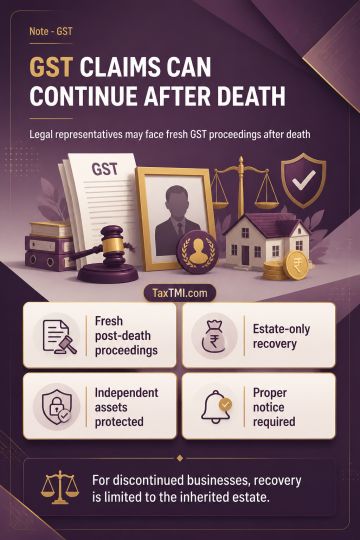
Post-death GST liability permits fresh proceedings against legal representatives, while discontinued-business recovery remains limited to the inherite...
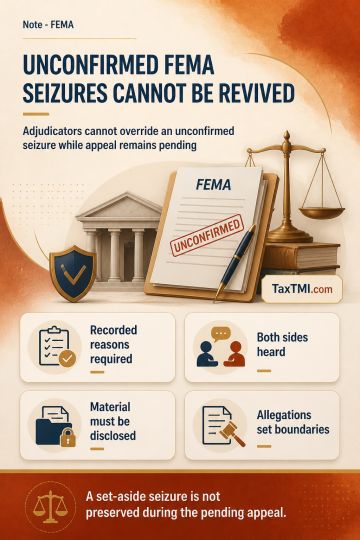
Non-confirmation of FEMA seizure prevents adjudicators from overriding pending appellate findings on recorded reasons and suspected foreign asset hold...
The HC held that the existence of an alternate statutory remedy does not render a writ petition under Article 226 non-maintainable, affirming the Court's discretion to entertain such petitions. The ED's jurisdiction to investigate under PMLA is contingent upon the presence of a predicate offence and identifiable proceeds of crime. The Court found that the ED lacked jurisdiction to attach fixed deposits as proceeds of crime since no new material linked the deposits to money laundering, and the investigation had spanned over a decade without such evidence. Further, under Section 66(2) PMLA, the ED cannot investigate offences beyond its remit without referral to the appropriate agency. Consequently, the impugned attachment order was quashed for jurisdictional error, and the petition was allowed.
The HC held that the existence of an alternate statutory remedy does not render a writ petition under Article 226 non-maintainable, affirming the Court's discretion to entertain such petitions. The ED's jurisdiction to investigate under PMLA is contingent upon the presence of a predicate offence and identifiable proceeds of crime. The Court found that the ED lacked jurisdiction to attach fixed deposits as proceeds of crime since no new material linked the deposits to money laundering, and the investigation had spanned over a decade without such evidence. Further, under Section 66(2) PMLA, the ED cannot investigate offences beyond its remit without referral to the appropriate agency. Consequently, the impugned attachment order was quashed for jurisdictional error, and the petition was allowed.
Note: It is a system-generated summary and is for quick reference only.
 TaxTMI
  TaxTMI