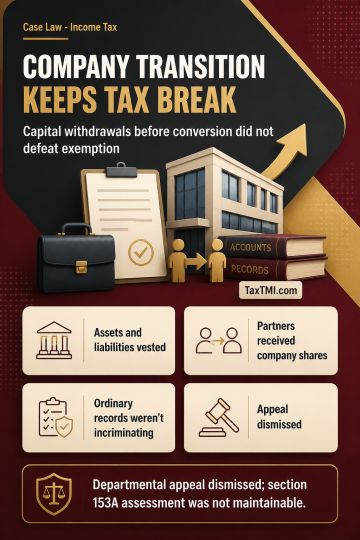
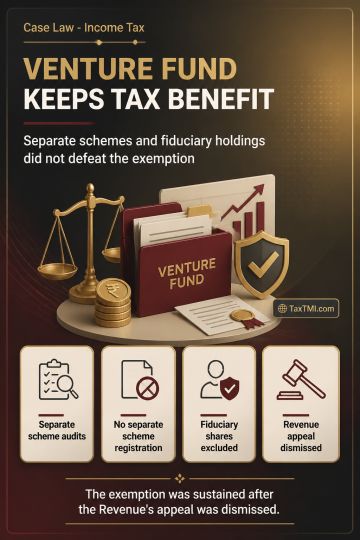
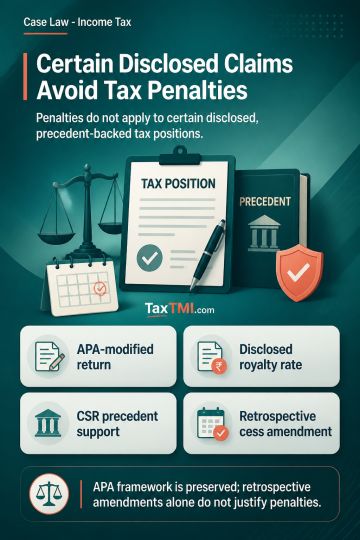
Faceless assessment and registration procedures are updated through electronic communication, revised recovery rules, extended deadlines, and replacem...
Risk-based selective vessel boarding requires accurate declarations and preserves master and agent liability where physical inspections are not select...
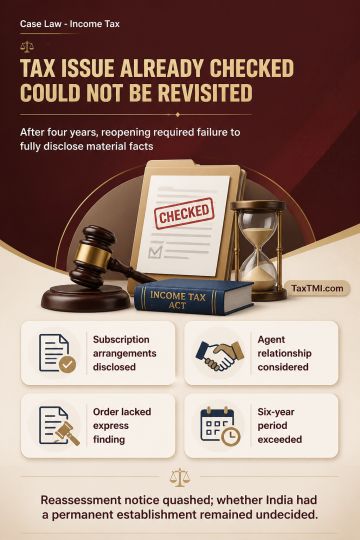
Permanent-establishment reassessment cannot revisit scrutinised disclosures; extended reopening fails without undisclosed material facts and within st...
The HC held that the issuance of an advisory for payment of interest under Section 50(1) of the GST Act on self-assessed tax paid after the due date does not violate natural justice principles, as no recovery action has been initiated without notice. The petitioner is liable to pay interest as per Sections 39(7) and 50(1) read with Rules 88B and 88C of the GST Rules. Recovery under Section 79 of the GST Act can only proceed after issuance of intimation in Form GST DRC-01D, serving as a statutory notice under Rule 142B of the GST Rules, allowing the petitioner an opportunity to respond. The advisory merely informs the petitioner of potential liability and does not constitute recovery action. Consequently, the court declined to interfere at this stage, disposing of the petition as the advisory is subject to further proceedings under the GST Act and Rules.
The HC held that the issuance of an advisory for payment of interest under Section 50(1) of the GST Act on self-assessed tax paid after the due date does not violate natural justice principles, as no recovery action has been initiated without notice. The petitioner is liable to pay interest as per Sections 39(7) and 50(1) read with Rules 88B and 88C of the GST Rules. Recovery under Section 79 of the GST Act can only proceed after issuance of intimation in Form GST DRC-01D, serving as a statutory notice under Rule 142B of the GST Rules, allowing the petitioner an opportunity to respond. The advisory merely informs the petitioner of potential liability and does not constitute recovery action. Consequently, the court declined to interfere at this stage, disposing of the petition as the advisory is subject to further proceedings under the GST Act and Rules.
Note: It is a system-generated summary and is for quick reference only.
 TaxTMI
  TaxTMI