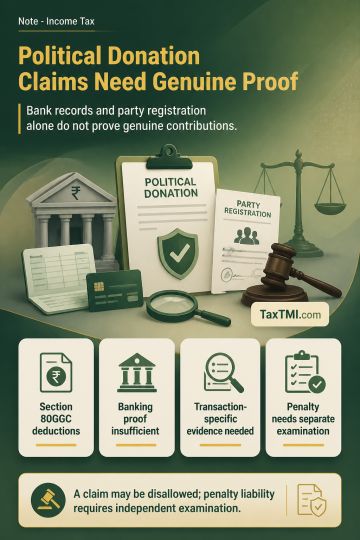
Political contribution deductions require genuine transactions; banking records and party registration alone cannot defeat evidence of accommodation e...
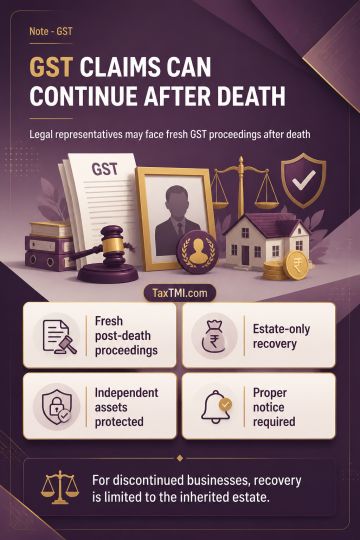
Post-death GST liability permits fresh proceedings against legal representatives, while discontinued-business recovery remains limited to the inherite...
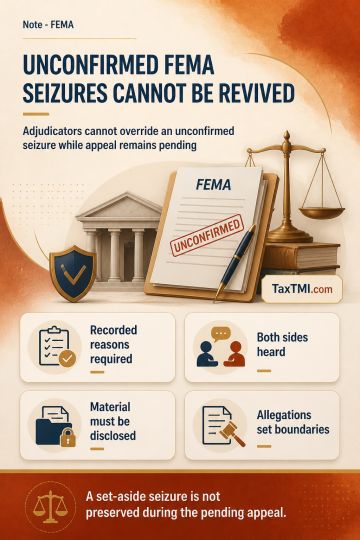
Non-confirmation of FEMA seizure prevents adjudicators from overriding pending appellate findings on recorded reasons and suspected foreign asset hold...
The CESTAT held that confiscation of export goods, duly cleared with appropriate customs duties and not prohibited for export, was unjustified under Section 51 of the Customs Act, 1962. The proceedings aimed solely to deny benefits under the Merchandise Exports from India Scheme (MEIS) of the Foreign Trade Policy (FTP), without allegations of non-export, substandard quality, or undervaluation. The Tribunal clarified that the ITC (HS) Code used in FTP is a directory and not a statutory basis for customs assessment or penalty. The reassessment of ITC (HS) Codes in shipping bills lacked legal authority, rendering the denial of MEIS benefits invalid. Consequently, the impugned order was quashed, and the appeal was allowed, restoring the appellant's entitlement to export promotion benefits.
The CESTAT held that confiscation of export goods, duly cleared with appropriate customs duties and not prohibited for export, was unjustified under Section 51 of the Customs Act, 1962. The proceedings aimed solely to deny benefits under the Merchandise Exports from India Scheme (MEIS) of the Foreign Trade Policy (FTP), without allegations of non-export, substandard quality, or undervaluation. The Tribunal clarified that the ITC (HS) Code used in FTP is a directory and not a statutory basis for customs assessment or penalty. The reassessment of ITC (HS) Codes in shipping bills lacked legal authority, rendering the denial of MEIS benefits invalid. Consequently, the impugned order was quashed, and the appeal was allowed, restoring the appellant's entitlement to export promotion benefits.
Note: It is a system-generated summary and is for quick reference only.
 TaxTMI
  TaxTMI