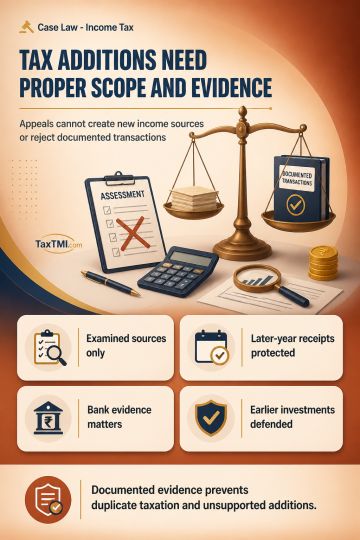
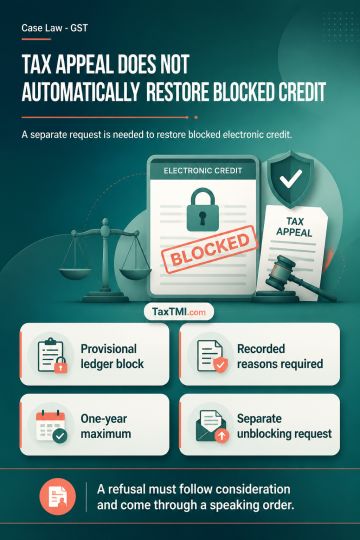
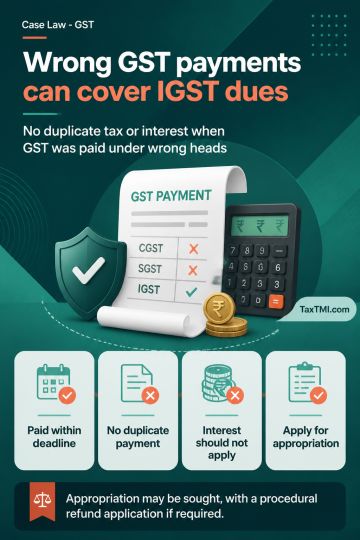
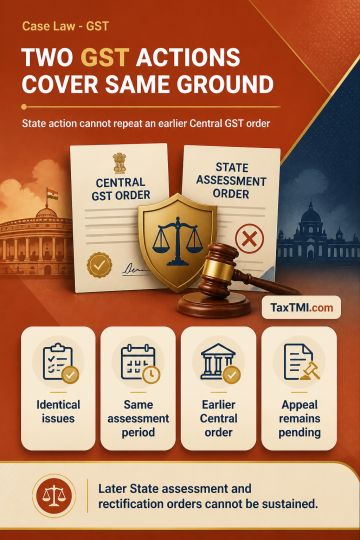
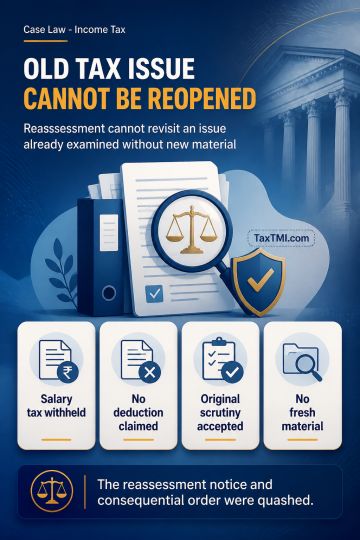
Appellate enhancement limits protect against new income sources, while documented credits and prior-year investments resist unexplained-income additio...
Capital-gains exemption for charitable trusts extends to qualifying fixed deposits, while unrecoverable TDS write-offs may constitute income applicati...
Page of 4868
Press 'Enter' after typing page number.
1 to 20 of 97344 Results
❮
❯
❯❯
0 / 200
Expand Note
Add to Folder
No Folders have been created
+
Are you sure you want to delete "My most important" ?
The HC held that the petitioner's rejection of IGST refund under Rule 96 of the CGST Rules was improper as the petitioner was not required initially to submit the EPCG Certificate, and its subsequent submission during appellate proceedings was valid. Clauses (a) to (d) of Rule 112(1) were inapplicable since the petitioner was neither denied the opportunity to produce evidence nor prevented by sufficient cause. The petitioner's utilization of Notification No.79/2017 for import of capital goods did not violate Rule 96(10). The Appellate Authority erred in not considering the additional evidence, including the EPCG Certificate and Bank Guarantee, which could entitle the petitioner to the refund. The matter was remanded for the Appellate Authority to verify the additional evidence and pass a fresh de novo order in accordance with law. The petition was disposed of by way of remand.
The HC held that the petitioner's rejection of IGST refund under Rule 96 of the CGST Rules was improper as the petitioner was not required initially to submit the EPCG Certificate, and its subsequent submission during appellate proceedings was valid. Clauses (a) to (d) of Rule 112(1) were inapplicable since the petitioner was neither denied the opportunity to produce evidence nor prevented by sufficient cause. The petitioner's utilization of Notification No.79/2017 for import of capital goods did not violate Rule 96(10). The Appellate Authority erred in not considering the additional evidence, including the EPCG Certificate and Bank Guarantee, which could entitle the petitioner to the refund. The matter was remanded for the Appellate Authority to verify the additional evidence and pass a fresh de novo order in accordance with law. The petition was disposed of by way of remand.
Note: It is a system-generated summary and is for quick reference only.
 TaxTMI
  TaxTMI