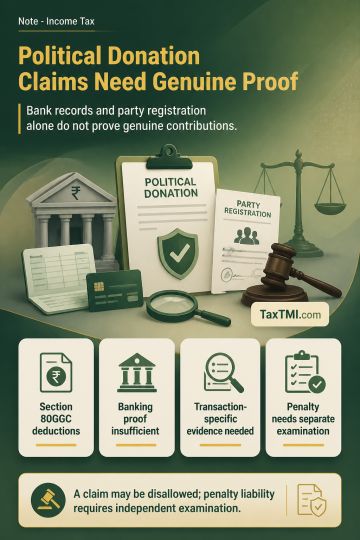
Political contribution deductions require genuine transactions; banking records and party registration alone cannot defeat evidence of accommodation e...
Post-death GST liability permits fresh proceedings against legal representatives, while discontinued-business recovery remains limited to the inherite...
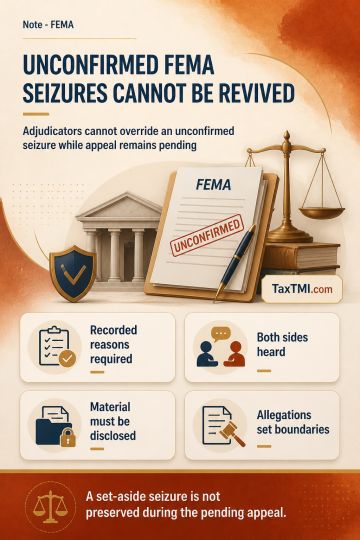
Non-confirmation of FEMA seizure prevents adjudicators from overriding pending appellate findings on recorded reasons and suspected foreign asset hold...
CESTAT held that customs duty under section 14 of the Customs Act can be determined based on transaction value reflected in invoices retrieved from importer's email account, even when different invoice was filed with Bill of Entry. The Larger Bench rejected the Division Bench's earlier ruling that emails found in importer's private capacity cannot substantiate mis-declaration cases. Court reasoned that Customs Act and 2007 Valuation Rules permit proper officer to consider email invoices for verification under section 46, and after rejecting declared transaction value, re-determination can proceed through rules 4-9. Since identical/similar goods' transaction values can be considered, email invoices for same consignment hold greater relevance. Appeals remanded to Division Bench for merit-based adjudication.
CESTAT held that customs duty under section 14 of the Customs Act can be determined based on transaction value reflected in invoices retrieved from importer's email account, even when different invoice was filed with Bill of Entry. The Larger Bench rejected the Division Bench's earlier ruling that emails found in importer's private capacity cannot substantiate mis-declaration cases. Court reasoned that Customs Act and 2007 Valuation Rules permit proper officer to consider email invoices for verification under section 46, and after rejecting declared transaction value, re-determination can proceed through rules 4-9. Since identical/similar goods' transaction values can be considered, email invoices for same consignment hold greater relevance. Appeals remanded to Division Bench for merit-based adjudication.
Note: It is a system-generated summary and is for quick reference only.
 TaxTMI
  TaxTMI