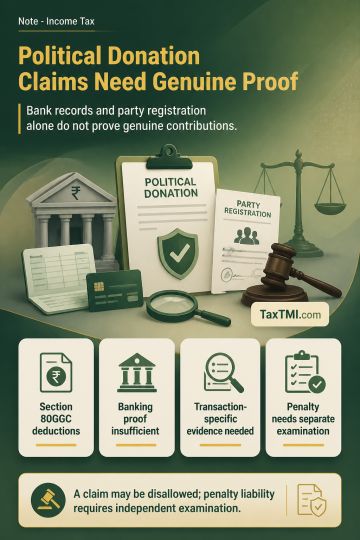
Political contribution deductions require genuine transactions; banking records and party registration alone cannot defeat evidence of accommodation e...
Post-death GST liability permits fresh proceedings against legal representatives, while discontinued-business recovery remains limited to the inherite...
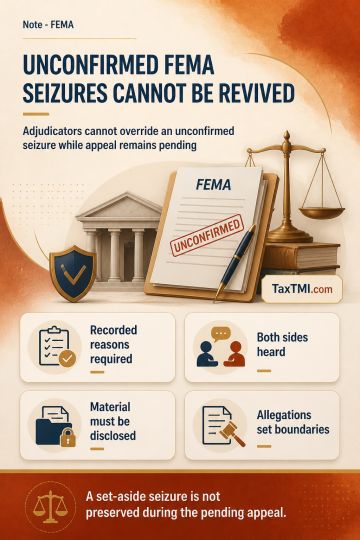
Non-confirmation of FEMA seizure prevents adjudicators from overriding pending appellate findings on recorded reasons and suspected foreign asset hold...
The ITAT allowed the appellant's claim for TDS credit that was denied because it appeared in the trust's Form 26AS rather than the appellant's, despite the appellant being the trust's sole beneficiary. The tribunal noted that an inequitable situation had arisen where the Department neither granted credit to the trust nor the appellant, while still raising a demand against the appellant. The ITAT directed the AO to transfer the TDS credit from the trust's Form 26AS to the appellant's and allow the credit in accordance with law, acknowledging that while procedural compliance is important, the substantive right to tax credit cannot be denied when tax has been legitimately deducted and remitted to the government.
The ITAT allowed the appellant's claim for TDS credit that was denied because it appeared in the trust's Form 26AS rather than the appellant's, despite the appellant being the trust's sole beneficiary. The tribunal noted that an inequitable situation had arisen where the Department neither granted credit to the trust nor the appellant, while still raising a demand against the appellant. The ITAT directed the AO to transfer the TDS credit from the trust's Form 26AS to the appellant's and allow the credit in accordance with law, acknowledging that while procedural compliance is important, the substantive right to tax credit cannot be denied when tax has been legitimately deducted and remitted to the government.
Note: It is a system-generated summary and is for quick reference only.
 TaxTMI
  TaxTMI