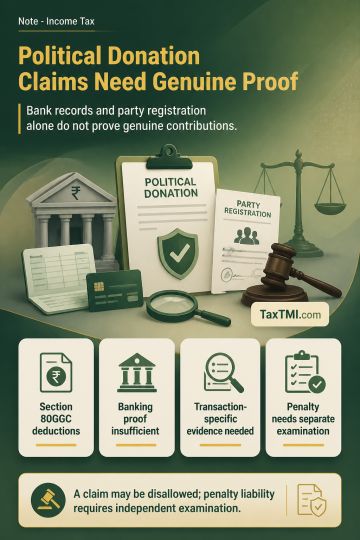
Political contribution deductions require genuine transactions; banking records and party registration alone cannot defeat evidence of accommodation e...
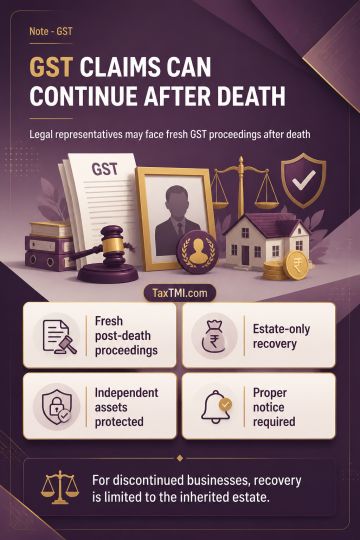
Post-death GST liability permits fresh proceedings against legal representatives, while discontinued-business recovery remains limited to the inherite...
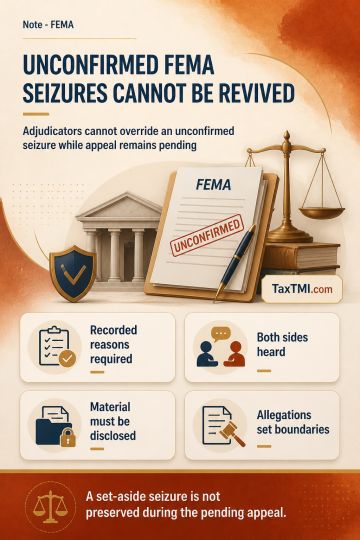
Non-confirmation of FEMA seizure prevents adjudicators from overriding pending appellate findings on recorded reasons and suspected foreign asset hold...
The High Court held that the writ petition challenging the show cause notice issued for levying GST on commission received under the Chit Funds Act is maintainable. Despite the availability of an alternate adjudication mechanism, the Court can exercise jurisdiction under Article 226 when proceedings are challenged as being without jurisdiction, based on the Supreme Court's judgment in Calcutta Discount Co. Ltd. v. ITO. In the present case, as per the Supreme Court's decision in Oriental Kuries Limited and Notification No.12 of 2017, the issuance of the show cause notice alleging GST levy on transactions under the Chit Funds Act is clearly without jurisdiction, without any disputed questions of fact. Therefore, the show cause notice is quashed as being issued without jurisdiction, and the writ petition is allowed.
The High Court held that the writ petition challenging the show cause notice issued for levying GST on commission received under the Chit Funds Act is maintainable. Despite the availability of an alternate adjudication mechanism, the Court can exercise jurisdiction under Article 226 when proceedings are challenged as being without jurisdiction, based on the Supreme Court's judgment in Calcutta Discount Co. Ltd. v. ITO. In the present case, as per the Supreme Court's decision in Oriental Kuries Limited and Notification No.12 of 2017, the issuance of the show cause notice alleging GST levy on transactions under the Chit Funds Act is clearly without jurisdiction, without any disputed questions of fact. Therefore, the show cause notice is quashed as being issued without jurisdiction, and the writ petition is allowed.
Note: It is a system-generated summary and is for quick reference only.
 TaxTMI
  TaxTMI