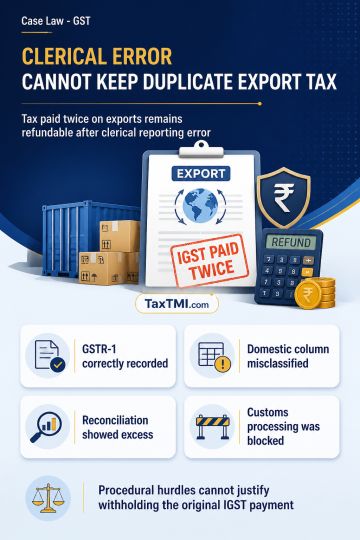
Political contribution deductions require genuine transactions; banking records and party registration alone cannot defeat evidence of accommodation e...
Post-death GST liability permits fresh proceedings against legal representatives, while discontinued-business recovery remains limited to the inherite...
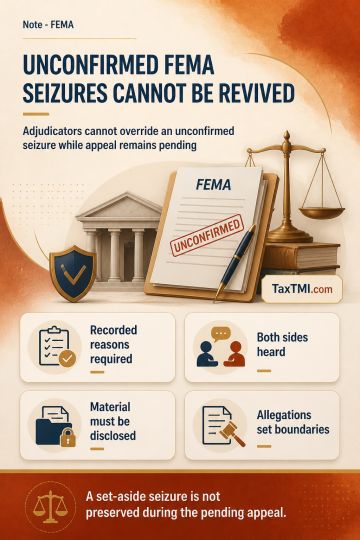
Non-confirmation of FEMA seizure prevents adjudicators from overriding pending appellate findings on recorded reasons and suspected foreign asset hold...
Interpretation of Sections 415 and 420 of the Indian Penal Code (IPC) and Section 66D of the Information Technology Act, 2000, in the context of online betting. The court held that for an offence u/s 415 (cheating) to be punishable u/s 420, there must be a person who has been deceived from the inception with a dishonest intention to commit fraud. The court found no evidence of any person being deceived or hoodwinked in the present case. Relying on Supreme Court precedents, the court concluded that the necessary ingredients for offences u/ss 415 and 420 IPC were not met. The state's investigation spanning over three years failed to identify any victims or evidence against the petitioners. Allowing further proceedings would amount to an abuse of the legal process. Invoking Section 482 of the Criminal Procedure Code, the High Court quashed the FIR to prevent a miscarriage of justice.
Interpretation of Sections 415 and 420 of the Indian Penal Code (IPC) and Section 66D of the Information Technology Act, 2000, in the context of online betting. The court held that for an offence u/s 415 (cheating) to be punishable u/s 420, there must be a person who has been deceived from the inception with a dishonest intention to commit fraud. The court found no evidence of any person being deceived or hoodwinked in the present case. Relying on Supreme Court precedents, the court concluded that the necessary ingredients for offences u/ss 415 and 420 IPC were not met. The state's investigation spanning over three years failed to identify any victims or evidence against the petitioners. Allowing further proceedings would amount to an abuse of the legal process. Invoking Section 482 of the Criminal Procedure Code, the High Court quashed the FIR to prevent a miscarriage of justice.
Note: It is a system-generated summary and is for quick reference only.
 TaxTMI
  TaxTMI