Political contribution deductions require genuine transactions; banking records and party registration alone cannot defeat evidence of accommodation e...
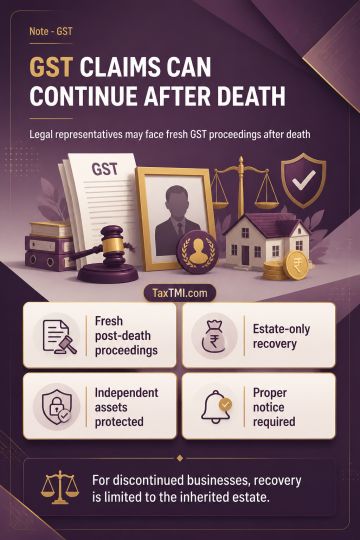
Post-death GST liability permits fresh proceedings against legal representatives, while discontinued-business recovery remains limited to the inherite...
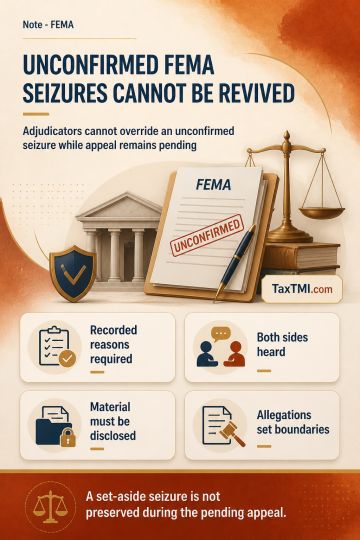
Non-confirmation of FEMA seizure prevents adjudicators from overriding pending appellate findings on recorded reasons and suspected foreign asset hold...
Classification of a security deposit made by the appellant for a lease deed with the corporate debtor, as either a financial debt or an operational debt under the Insolvency and Bankruptcy Code (IBC). The key points are: The security deposit is a claim within the meaning of the IBC. To qualify as a financial debt u/s 5(8), there must be a disbursal of money against consideration for the time value of money. However, the security deposit was a refundable corpus amount without interest, not disbursed for time value of money, lacking elements of commercial borrowing. Therefore, it does not satisfy the definition of financial debt. An operational debt u/s 5(21) relates to claims for provision of goods, services, employment, or government dues. The security deposit, being an advance for prospective occupation and use of leased premises, can be considered a claim for services, satisfying the definition of operational debt. The NCLAT held that the security deposit should be classified as an operational debt, and the appellant should be accorded the status of an operational creditor. The resolution professional was directed to admit the appellant's claim as an operational creditor and allow the appellant to substitute the relevant form.
Classification of a security deposit made by the appellant for a lease deed with the corporate debtor, as either a financial debt or an operational debt under the Insolvency and Bankruptcy Code (IBC). The key points are: The security deposit is a claim within the meaning of the IBC. To qualify as a financial debt u/s 5(8), there must be a disbursal of money against consideration for the time value of money. However, the security deposit was a refundable corpus amount without interest, not disbursed for time value of money, lacking elements of commercial borrowing. Therefore, it does not satisfy the definition of financial debt. An operational debt u/s 5(21) relates to claims for provision of goods, services, employment, or government dues. The security deposit, being an advance for prospective occupation and use of leased premises, can be considered a claim for services, satisfying the definition of operational debt. The NCLAT held that the security deposit should be classified as an operational debt, and the appellant should be accorded the status of an operational creditor. The resolution professional was directed to admit the appellant's claim as an operational creditor and allow the appellant to substitute the relevant form.
Note: It is a system-generated summary and is for quick reference only.
 TaxTMI
  TaxTMI