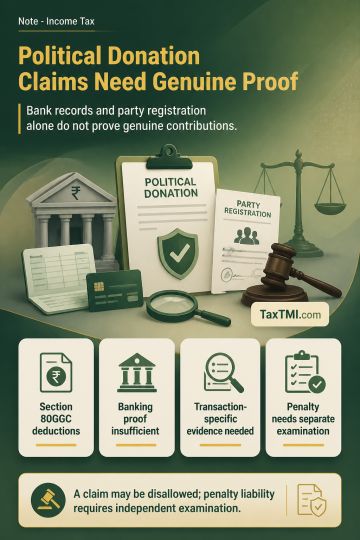
Political contribution deductions require genuine transactions; banking records and party registration alone cannot defeat evidence of accommodation e...
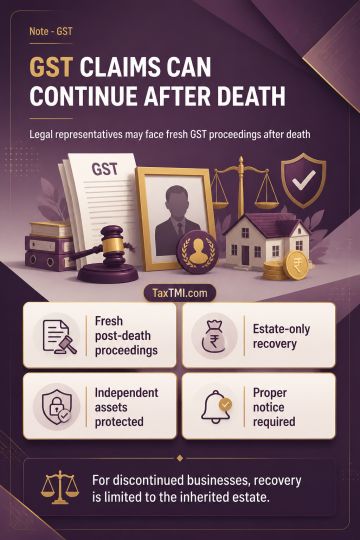
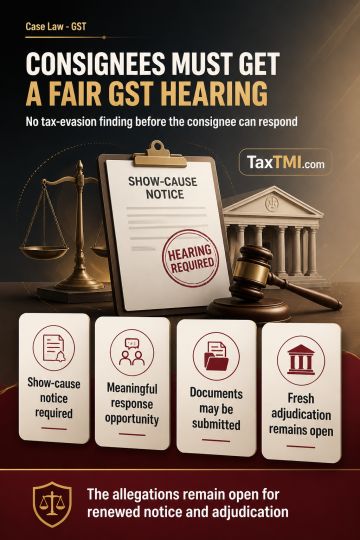
Post-death GST liability permits fresh proceedings against legal representatives, while discontinued-business recovery remains limited to the inherite...
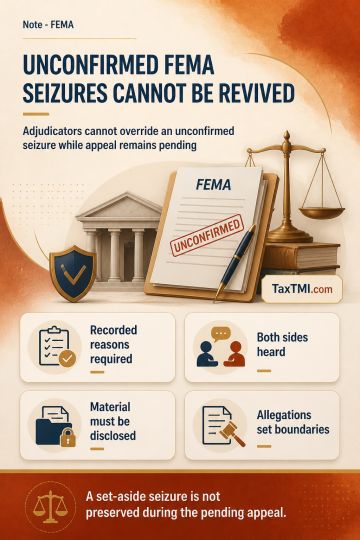
Non-confirmation of FEMA seizure prevents adjudicators from overriding pending appellate findings on recorded reasons and suspected foreign asset hold...
Seizure order for detention of goods due to absence of State E-way Bill was challenged. The Court held that at the time of interception, the Central E-way Bill under GST Act was available, and only the E-way Bill under UP GST Act was not present, which was later produced before passing the penalty order. The issue was covered by previous Division Bench judgments, which held that from 1.2.2018 to 31.3.2018, the requirement of E-way Bill under UP GST Act was not enforceable. Since the goods were detained and seized on 23.3.2018 solely for the absence of the E-way Bill under UP GST Act, and the Central E-way Bill was accompanying the goods, the detention order, seizure order, and penalty were unjustified. Consequently, the impugned orders dated 24.3.2018 and 1.10.2020 were quashed by the High Court, and the petition was allowed.
Seizure order for detention of goods due to absence of State E-way Bill was challenged. The Court held that at the time of interception, the Central E-way Bill under GST Act was available, and only the E-way Bill under UP GST Act was not present, which was later produced before passing the penalty order. The issue was covered by previous Division Bench judgments, which held that from 1.2.2018 to 31.3.2018, the requirement of E-way Bill under UP GST Act was not enforceable. Since the goods were detained and seized on 23.3.2018 solely for the absence of the E-way Bill under UP GST Act, and the Central E-way Bill was accompanying the goods, the detention order, seizure order, and penalty were unjustified. Consequently, the impugned orders dated 24.3.2018 and 1.10.2020 were quashed by the High Court, and the petition was allowed.
Note: It is a system-generated summary and is for quick reference only.
 TaxTMI
  TaxTMI