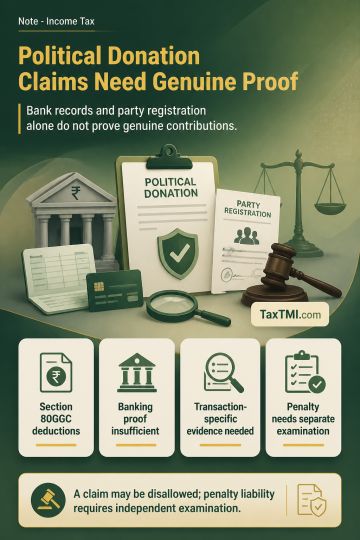
Political contribution deductions require genuine transactions; banking records and party registration alone cannot defeat evidence of accommodation e...
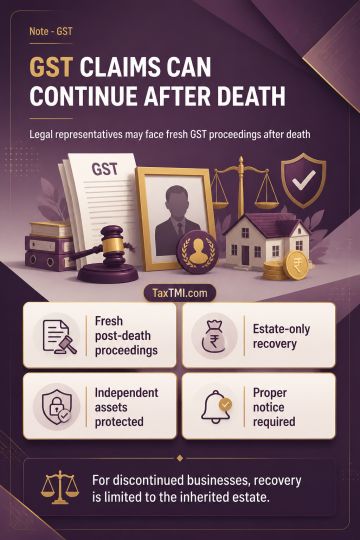
Post-death GST liability permits fresh proceedings against legal representatives, while discontinued-business recovery remains limited to the inherite...
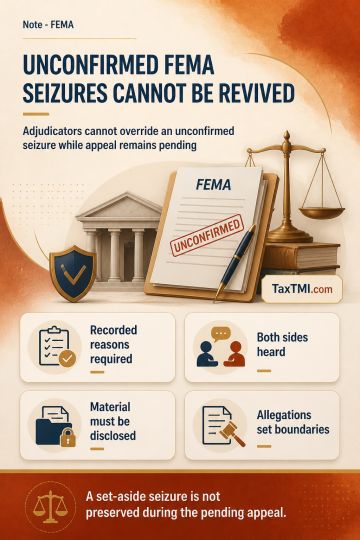
Non-confirmation of FEMA seizure prevents adjudicators from overriding pending appellate findings on recorded reasons and suspected foreign asset hold...
Section 110 of the Customs Act, 1962 allows proper officers to seize goods liable for confiscation. The Supreme Court in Indru Ramchand Bharvani v. Union of India held that courts should not interfere with fact-finding bodies' conclusions based on preponderance of evidence, unless unreasonable. The preventive wing of customs has jurisdiction to seize goods from domestic cargo complexes, as preventive officers have overall jurisdiction to prevent smuggling under the Customs Act and relevant manuals. Notifications issued u/s 4(1) for administrative convenience should be interpreted to give effect to their purpose, without hair-splitting exercises by courts. Consequently, the seizure by the preventive department was valid, and the High Court order setting it aside was incorrect. The appeal is allowed.
Section 110 of the Customs Act, 1962 allows proper officers to seize goods liable for confiscation. The Supreme Court in Indru Ramchand Bharvani v. Union of India held that courts should not interfere with fact-finding bodies' conclusions based on preponderance of evidence, unless unreasonable. The preventive wing of customs has jurisdiction to seize goods from domestic cargo complexes, as preventive officers have overall jurisdiction to prevent smuggling under the Customs Act and relevant manuals. Notifications issued u/s 4(1) for administrative convenience should be interpreted to give effect to their purpose, without hair-splitting exercises by courts. Consequently, the seizure by the preventive department was valid, and the High Court order setting it aside was incorrect. The appeal is allowed.
Note: It is a system-generated summary and is for quick reference only.
 TaxTMI
  TaxTMI