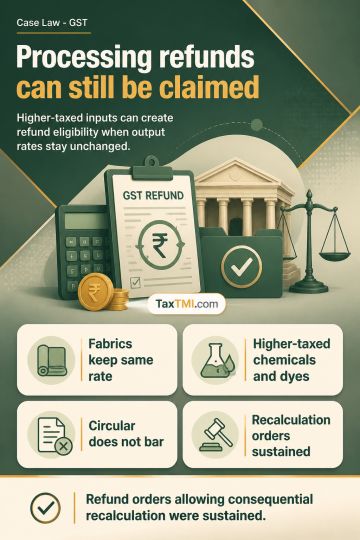
Credit-note turnover adjustments preserve inverted-duty refunds, while ministerial re-computation does not constitute an impermissible appellate reman...
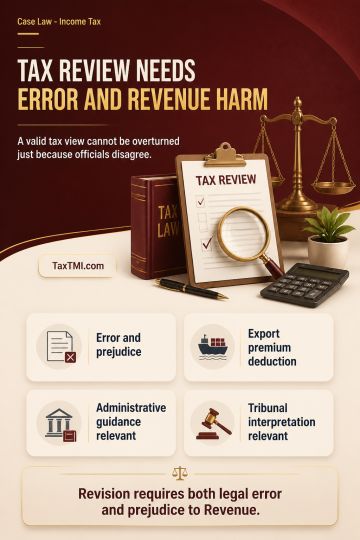
Revisional jurisdiction over export quota premium deductions requires both error and Revenue prejudice; a permissible assessment view cannot be displa...
The Appellate Tribunal addressed eligibility for exemption u/s 10(23AAA), 11, and 12. The AO denied the claim as it wasn't made in the original return. However, the Tribunal found the assessee met conditions for sections 11-13. The AO's reasons were deemed insufficient, supporting CIT (A)'s order. The assessee's status as a "State" was analyzed, distinguishing between state-controlled bodies and independent entities. Citing case law, the Tribunal held the assessee qualified as a "State" under Article 289(1) due to deep state control and public importance of functions. Principles for taxing interest earned by state instrumentalities were outlined. Ultimately, the decision favored the assessee, rejecting the revenue's grounds.
The Appellate Tribunal addressed eligibility for exemption u/s 10(23AAA), 11, and 12. The AO denied the claim as it wasn't made in the original return. However, the Tribunal found the assessee met conditions for sections 11-13. The AO's reasons were deemed insufficient, supporting CIT (A)'s order. The assessee's status as a "State" was analyzed, distinguishing between state-controlled bodies and independent entities. Citing case law, the Tribunal held the assessee qualified as a "State" under Article 289(1) due to deep state control and public importance of functions. Principles for taxing interest earned by state instrumentalities were outlined. Ultimately, the decision favored the assessee, rejecting the revenue's grounds.
Note: It is a system-generated summary and is for quick reference only.
 TaxTMI
  TaxTMI