We've upgraded AI Search on TaxTMI with two powerful modes:
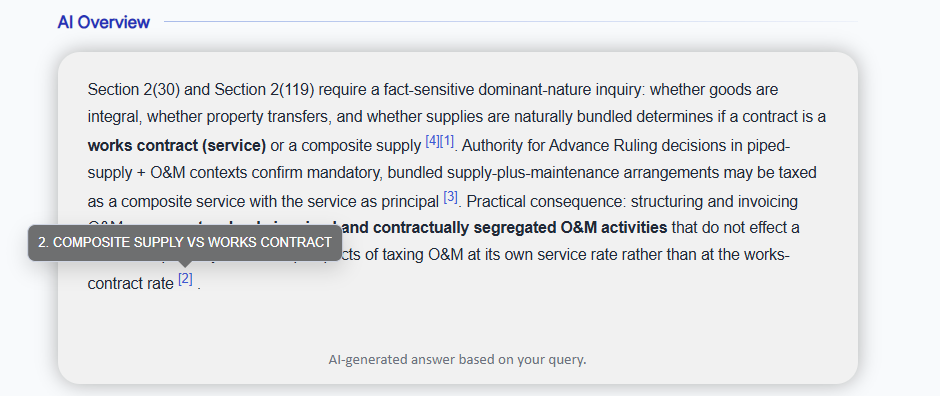
1. Basic • Quick overview summary answering your query with references• Category-wise results to explore all relevant documents on TaxTMI
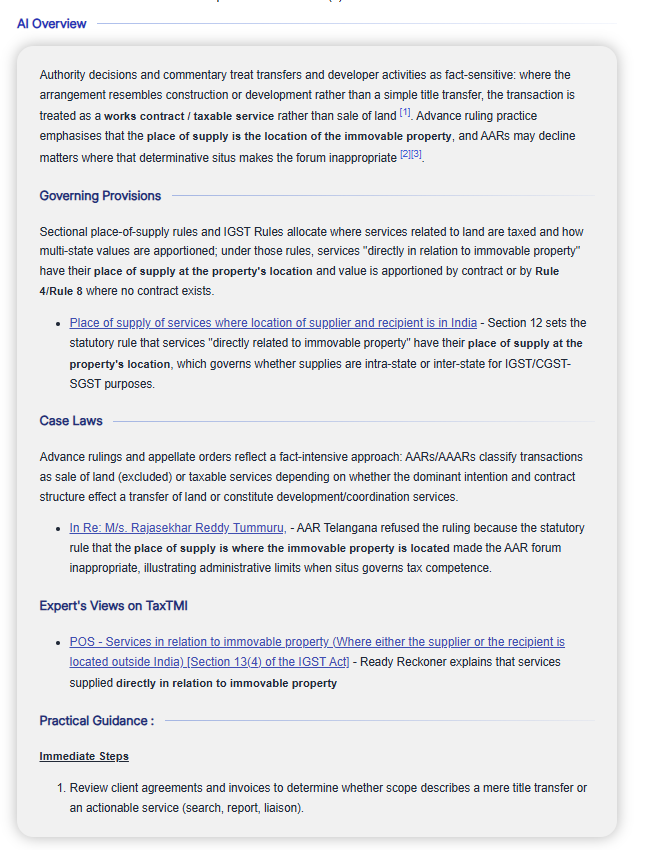
2. Advanced • Includes everything in Basic • Detailed report covering: - Overview Summary - Governing Provisions [Acts, Notifications, Circulars] - Relevant Case Laws - Tariff / Classification / HSN - Expert views from TaxTMI - Practical Guidance with immediate steps and dispute strategy
• Also highlights how each document is relevant to your query, helping you quickly understand key insights without reading the full text.Help Us Improve - by giving the rating with each AI Result:
Cases where this provision is explicitly mentioned in the judgment/order text; may not be exhaustive. To view the complete list of cases mentioning this section, Click here.
Provisions expressly mentioned in the judgment/order text.
<h1>Non-resident company's project expenses allowed as deductions; penalties dismissed for procedural lapses</h1> The ITAT Ahmedabad allowed deductions for necessary business expenses incurred by a non-resident company, finding them to be wholly and exclusively for ... Allowability of business expenditure wholly and exclusively for the purpose of business - distinction between supervision and execution in a subcontracting arrangement - Section 44C - restriction on deduction of head office expenditure and its inapplicability to project specific expenses - reimbursement to subcontractor and characterization of expenditure in hands of contractor - deductibility and withholding implications under section 40(a)(i) / section 195 for payments to non residents (fees for technical services versus reimbursement) - temporary structures - revenue expenditure versus capital asset and 100% depreciation under Income tax Rules Appendix I - penalty under section 271(1)(c) and limitation under section 275 - time bar and void ab initio - onus of proof on assessee to substantiate business expenditure - treaty / non discrimination argument in contesting statutory caps on head office allocationAllowability of business expenditure wholly and exclusively for the purpose of business - Section 44C - restriction on deduction of head office expenditure and its inapplicability to project specific expenses - distinction between supervision and execution in a subcontracting arrangement - onus of proof on assessee to substantiate business expenditure - Whether expenditures debited by the foreign head office and reimbursed to the project (notably expatriate salaries, air fares, visa and medical expenses) are deductible in the hands of the assessee contractor and whether Section 44C limits apply - HELD THAT: - The Tribunal examined the principal contract, the back to back subcontract and the factual operation of those agreements and concluded that the contractor remained 'entirely and solely responsible' for execution of the principal contract even after subcontracting. The assessee had contractual obligations (including supervision, quality assurance, guarantees and liability for delay) that necessitated deputing expatriate personnel; the expenditures were incurred for the Dahej project and not as general overseas head office overheads. While the CIT(A) had estimated a 5% supervision component on salaries and related expenses in absence of verifiable breakdown, the Tribunal found on the material before it that the assessee was justified in incurring the expenses and that the Assessing Officer had not challenged genuineness or shown duplication of claims. Project specific expenses incurred by the head office for supervisory personnel and guarantees therefore did not fall within the common overhead/head office expenditure concept under Section 44C and the statutory ceiling was not attracted. The Tribunal thus accepted that these amounts were expended wholly and exclusively for the purposes of the assessee's business and deleted the additions. [Paras 11, 12, 13, 14, 15]Additions disallowing head office/project expenses (expatriate salaries and related costs) deleted; Section 44C held not applicable to these project specific expenditures.Reimbursement to subcontractor and characterization of expenditure in hands of contractor - distinction between supervision and execution in a subcontracting arrangement - allowability of business expenditure wholly and exclusively for the purpose of business - Whether amounts reimbursed by the assessee to the subcontractor (sundry expenses, rent, travel, telephone, equipment hire, electricity, house maintenance, mess food, staff wages etc.) were deductible in the hands of the assessee or were the contractual responsibility of the subcontractor - HELD THAT: - The Tribunal considered the Sixth Schedule to the subcontract and the contractual scheme. It found that although certain items in Part 1 of the Sixth Schedule were to be provided by the subcontractor, the overall contractual matrix left the contractor with continuing responsibility and obligation to ensure satisfactory execution. The Tribunal further held that there was no evidence of duplication of claims nor any challenge to the genuineness of the expenditures. On the same reasoning adopted for head office/project expenses, and after reviewing the Sixth Schedule, the Tribunal set aside the disallowances made by lower authorities and deleted the additions that sought to treat reimbursements as exclusively subcontractor's liabilities; earlier limited allowances made by CIT(A) were set aside and the full amounts were allowed where supported as project expenditures. [Paras 16, 18]Disallowances in respect of amounts reimbursed to subcontractor deleted; reimbursements accepted as expenditure of the assessee where they related to the Dahej project.Application of earlier findings to subsequent assessment years - allowability of business expenditure wholly and exclusively for the purpose of business - Whether the reasoning and conclusions on the head office/project and subcontractor expenditure for AY 1998 99 apply to AYs 1999 2000 and 2000 2001 - HELD THAT: - The Tribunal noted that the issues in the subsequent assessment years were identical in nature and fact to those decided for AY 1998 99. On the parties' submissions and having considered the identical grounds, the Tribunal expressly followed and applied the same reasoning and outcome reached in the 1998 99 decision to the later years, set aside the orders of the authorities below and deleted the additions in those years as well. Consequential items (including interest or similarly computed consequences) were directed to follow the primary deletions. [Paras 23, 29]Orders for AY 1999 2000 and AY 2000 2001 set aside in line with AY 1998 99 findings; additions deleted.Section 40(a)(i) / section 195 - withholding obligations for payments to non residents - fees for technical services versus reimbursement - Whether amounts paid (via head office/subcontractor) to foreign consultants constituted fees for technical services attracting TDS liability under sections 195/9(1)(vii) and disallowance under section 40(a)(i) - HELD THAT: - The Tribunal reviewed the record and the Assessing Officer's material and found that the AO had not established that the recipients were chargeable to tax in India or that the amounts represented taxable fees rather than reimbursements for project specific expenditure. The AO failed to examine treaty provisions or to bring on record evidence of a permanent establishment or business connection of the payees in India. In absence of material demonstrating that the payments were income chargeable to tax in India, the statutory withholding provisions did not apply and the consequential disallowance under section 40(a)(i) could not be sustained. The Tribunal therefore deleted the disallowance. [Paras 38]Disallowance under section 40(a)(i) (and related withholding claim) deleted for lack of material establishing chargeability of the payments in India.Temporary structures - revenue expenditure versus capital asset and 100% depreciation under Income tax Rules Appendix I - Whether expenditure on camp units, camp equipment and associated temporary site infrastructure is revenue expenditure or capital, and whether 100% depreciation applies - HELD THAT: - The Tribunal examined the nature, purpose and contractual obligation to dismantle site structures on completion of the project. It held that the units were erected solely to facilitate project execution in a remote location and were to be removed on project completion; they did not create enduring assets for the assessee. Citing relevant precedents, the Tribunal concluded these outlays were revenue in nature and deductible in the year of incurrence. Consequently, there was no need to consider alternative relief by way of depreciation; the prior disallowance was set aside and the expenditure allowed as revenue expense. [Paras 43]Expenditure on camp units, equipment and site infrastructure held to be revenue expenditure; additions deleted.Penalty under section 271(1)(c) and limitation under section 275 - time bar and void ab initio - Whether the penalty levied under section 271(1)(c) was time barred / void because it was not imposed within the limitation prescribed by section 275 - HELD THAT: - The Tribunal analysed the chronology of the assessment, appellate and interlocutory orders, including the initiation notice (12 03 2003), CIT(A) order (23 02 2004), the AO's order dropping penalty (30 03 2005), the ITAT consolidated order (25 08 2005), and later orders giving effect to ITAT. The Tribunal held that proviso to section 275(1) governed the limitation here and that the assessing officer's penalty order dated 31 05 2007 was beyond the permissible period (the penalty should have been imposed on or before 31 03 2005). The later insertion of section 275(1A) (by amendment effective 13 07 2006) could not be invoked retrospectively to validate a time barred order, and the AO had not initiated fresh penalty proceedings after dropping them. On these grounds the Tribunal concluded the penalty order was bad in law and void ab initio and, on merits, noted absence of requisite satisfaction and notice for new additions. [Paras 50, 51, 52]Penalty under section 271(1)(c) held time barred and void ab initio; penalty deleted.Final Conclusion: Applying contract terms, factual matrix and precedents the Tribunal deleted the contested additions: project specific head office and reimbursed subcontractor expenses were allowed (Section 44C held inapplicable), the section 40(a)(i) disallowance was deleted for lack of chargeability proof, temporary camp expenditures were held revenue in nature and allowed, and the penalty under section 271(1)(c) was quashed as time barred under section 275. Consequential appeals were disposed accordingly. Issues Involved:1. Disallowance of several expenditures like salary, air fares, visa charges, and medical expenses.2. Application of Section 44C of the Income Tax Act.3. Disallowance of various expenses reimbursed to the sub-contractor.4. Validity and applicability of Section 271(1)(c) penalty proceedings.5. Treatment of expenditure on temporary structures as capital or revenue in nature.Detailed Analysis:1. Disallowance of Several Expenditures:- Facts and Arguments: The assessee, a non-resident company, incurred expenses on expatriate personnel for a project in Gujarat. The Assessing Officer (AO) disallowed these expenses, arguing they were the responsibility of the sub-contractor.- Findings: The ITAT found that the assessee was still responsible for the overall execution and supervision of the project, despite subcontracting parts of it. The expenses were incurred wholly and exclusively for the business. The ITAT allowed 5% of the salary expenses and related costs as deductible.- Conclusion: The expenses were necessary for the business and partially allowed as deductions.2. Application of Section 44C:- Facts and Arguments: The AO applied Section 44C, limiting the deduction of head office expenses, arguing that these were incurred outside India.- Findings: The ITAT held that the expenses were specific to the Dahej project and not general administrative expenses. Therefore, Section 44C was not applicable.- Conclusion: The expenses were project-specific and not subject to the limitations of Section 44C.3. Disallowance of Various Expenses Reimbursed to the Sub-Contractor:- Facts and Arguments: The AO disallowed expenses reimbursed to the sub-contractor, arguing they were the sub-contractor's responsibility.- Findings: The ITAT found that the expenses were necessary for the project and incurred by the assessee. The disallowance was not justified.- Conclusion: The expenses were legitimate business expenses and allowed as deductions.4. Validity and Applicability of Section 271(1)(c) Penalty Proceedings:- Facts and Arguments: The AO initiated penalty proceedings under Section 271(1)(c) for concealment of income and furnishing inaccurate particulars.- Findings: The ITAT noted that the penalty order was passed beyond the time prescribed under Section 275. The penalty proceedings were dropped earlier, and no fresh proceedings were initiated in the subsequent assessment order.- Conclusion: The penalty order was void ab initio and canceled.5. Treatment of Expenditure on Temporary Structures:- Facts and Arguments: The assessee incurred expenses on temporary structures at the project site. The AO treated these as capital expenditure, allowing depreciation at a lower rate.- Findings: The ITAT found that the structures were temporary and necessary for the business. The expenditure was revenue in nature.- Conclusion: The expenditure was allowed as revenue expenditure, and the entire addition was deleted.Summary:The ITAT Ahmedabad dealt with cross appeals involving multiple issues related to the disallowance of business expenses, application of Section 44C, and the validity of penalty proceedings under Section 271(1)(c). The tribunal found that the expenses were necessary for the business and incurred wholly and exclusively for the project, thus allowing them as deductions. The penalty proceedings were found to be void due to procedural lapses and the time-barred nature of the penalty order. The expenditure on temporary structures was considered revenue in nature and allowed as a deduction. The appeals were decided in favor of the assessee, with the departmental appeals being dismissed.
 TaxTMI
  • Category-wise results to explore all relevant documents on TaxTMI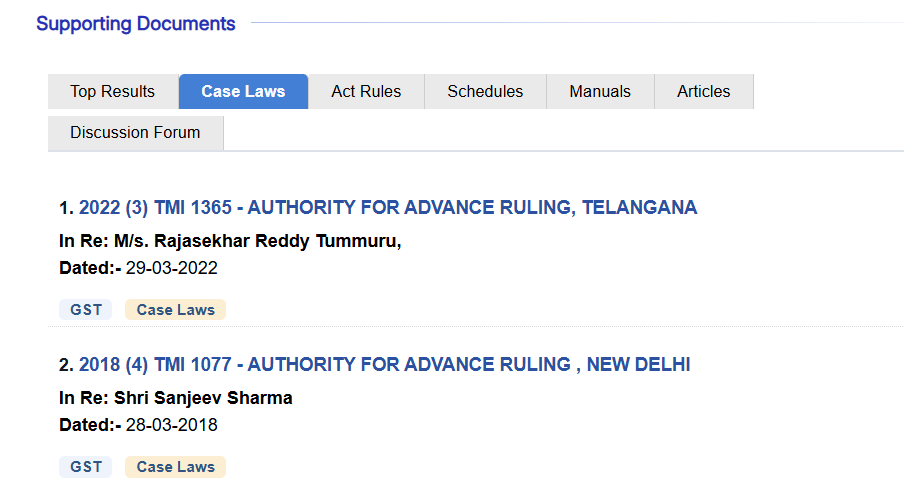
 Help Us Improve - by giving the rating with each AI Result:
 TaxTMI
 TaxTMI


