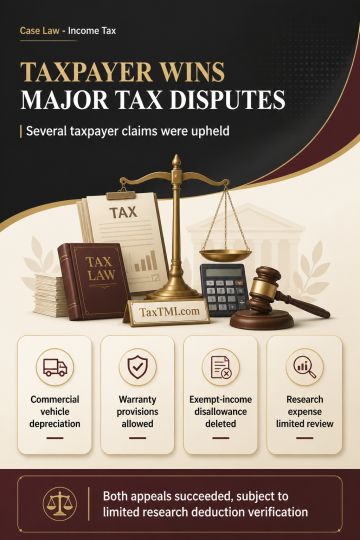
Commercial vehicle depreciation, scientifically determined warranty provisions and exempt-income disallowances were resolved in favour of the taxpayer...
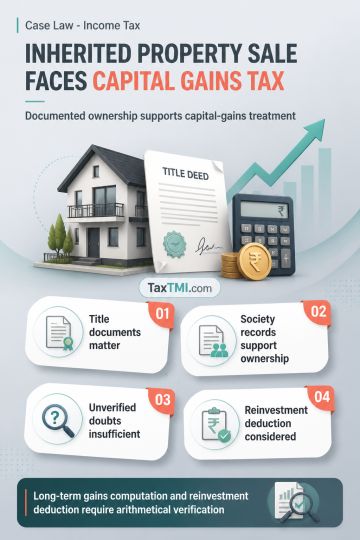
Inherited property sale proceeds require capital-gains treatment where ownership is supported by evidence, not suspicion or unverified signature doubt...
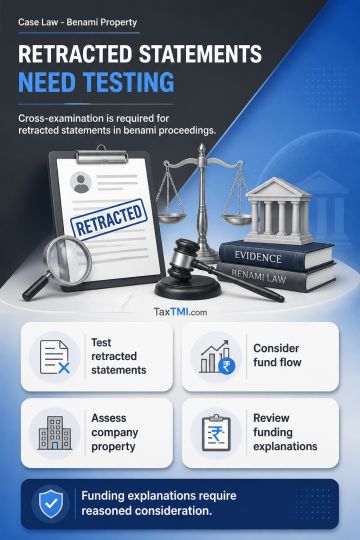
Cross-examination of retracted statements is essential where foundational evidence supports a benami allegation and documented funding explanations re...
Capital-goods exemption covers plant-modernisation accessories, while the import restriction applies only to earlier capital-goods components and spar...
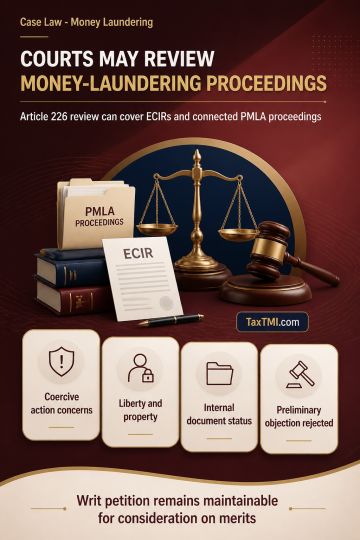
Constitutional judicial review permits challenges to ECIRs and connected money-laundering proceedings where coercive action affects fundamental intere...
HC dismissed the writ petition challenging the SCN issued by Central GST authorities. It held that the applicability of Section 6 of the CGST Act, the interplay between State and Central proceedings, the effect of earlier State GST orders (including audit orders), and the petitioner's precise status as a "government authority" are all contentious factual and legal issues requiring adjudication by the competent authority. The SCN could not be termed "wholly without jurisdiction" at the threshold. Relying on the SC's jurisprudence on alternative remedies, the HC declined to exercise its writ jurisdiction under Article 226 and left all contentions open to be urged before the adjudicating authority.
HC dismissed the writ petition challenging the SCN issued by Central GST authorities. It held that the applicability of Section 6 of the CGST Act, the interplay between State and Central proceedings, the effect of earlier State GST orders (including audit orders), and the petitioner's precise status as a "government authority" are all contentious factual and legal issues requiring adjudication by the competent authority. The SCN could not be termed "wholly without jurisdiction" at the threshold. Relying on the SC's jurisprudence on alternative remedies, the HC declined to exercise its writ jurisdiction under Article 226 and left all contentions open to be urged before the adjudicating authority.
Note: It is a system-generated summary and is for quick reference only.
 TaxTMI
 of 4780











 Join Channel


 TaxTMI
