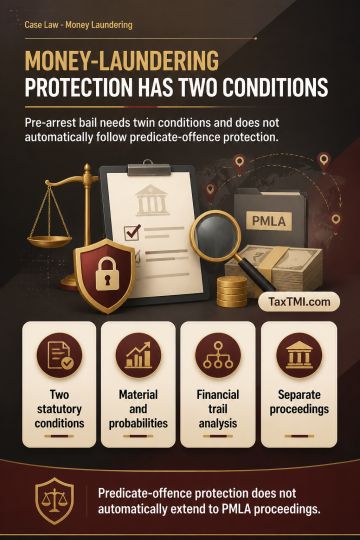
PMLA anticipatory bail requires satisfaction of twin conditions, while predicate-offence protection does not extend to independent money-laundering pr...
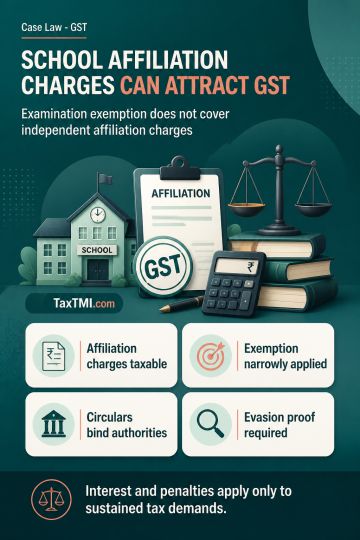
School-affiliation charges remain taxable where not directly connected with examinations, while extended limitation requires proof of deliberate tax e...
Concessional penalty for search-disclosed unreconciled jewellery applies where substantive disclosure conditions are met despite omission from origina...
Page of 4826
Press 'Enter' after typing page number.
1 to 20 of 96510 Results
❮
❯
❯❯
0 / 200
Expand Note
Add to Folder
No Folders have been created
+
Are you sure you want to delete "My most important" ?
The CESTAT allowed the appeal filed by the assessee (A) and set aside the impugned order of the Commr (A). It held that the invocation of the extended period of limitation under the proviso to s.73(1) of the Finance Act for non-payment of service tax on car parking charges was unsustainable. The Tribunal observed that mere contravention of statutory provisions while filing self-assessed returns, without any positive act indicating fraud, collusion, wilful misstatement or deliberate suppression of facts with intent to evade tax, does not justify recourse to the extended limitation. As the SCN and record did not establish a conscious intent to evade service tax, the preconditions for applying the extended five-year period were not met. Consequently, the demand raised beyond the normal limitation period, along with related consequences, was quashed, and relief was granted to A.
The CESTAT allowed the appeal filed by the assessee (A) and set aside the impugned order of the Commr (A). It held that the invocation of the extended period of limitation under the proviso to s.73(1) of the Finance Act for non-payment of service tax on car parking charges was unsustainable. The Tribunal observed that mere contravention of statutory provisions while filing self-assessed returns, without any positive act indicating fraud, collusion, wilful misstatement or deliberate suppression of facts with intent to evade tax, does not justify recourse to the extended limitation. As the SCN and record did not establish a conscious intent to evade service tax, the preconditions for applying the extended five-year period were not met. Consequently, the demand raised beyond the normal limitation period, along with related consequences, was quashed, and relief was granted to A.
Note: It is a system-generated summary and is for quick reference only.
 TaxTMI
  TaxTMI







 Join Channel