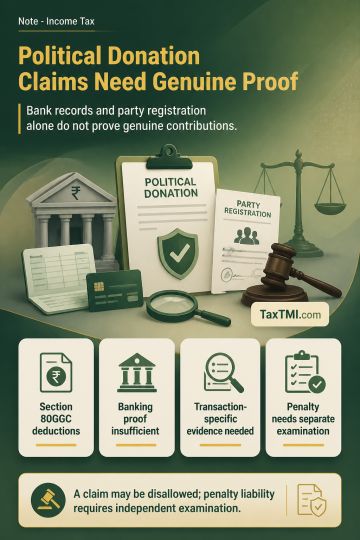
Political contribution deductions require genuine transactions; banking records and party registration alone cannot defeat evidence of accommodation e...
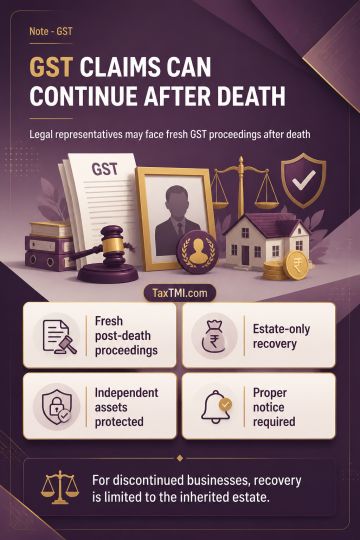
Post-death GST liability permits fresh proceedings against legal representatives, while discontinued-business recovery remains limited to the inherite...
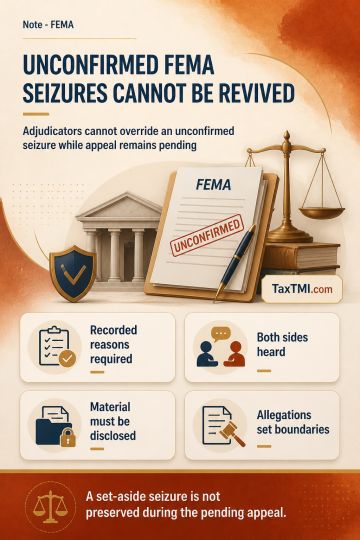
Non-confirmation of FEMA seizure prevents adjudicators from overriding pending appellate findings on recorded reasons and suspected foreign asset hold...
CESTAT held that the statutory definition of "importer" in Section 2(26) of the Customs Act, 1962 is unambiguous and confined to the period between importation and clearance for home consumption; only a person exercising ownership, effective control or lien over goods during that period qualifies as importer. The appellant had no evidence of control or interest prior to clearance and acquired ownership only post-clearance, hence did not qualify as importer and was not liable under Section 28 for customs duty or interest. Absolute confiscation was unsustainable as gold is restricted, not prohibited; neither knowledge nor reason-to-believe under Section 111 was established, so penalty under Section 112(b)(i) failed. The impugned order was set aside and the original adjudication restored.
CESTAT held that the statutory definition of "importer" in Section 2(26) of the Customs Act, 1962 is unambiguous and confined to the period between importation and clearance for home consumption; only a person exercising ownership, effective control or lien over goods during that period qualifies as importer. The appellant had no evidence of control or interest prior to clearance and acquired ownership only post-clearance, hence did not qualify as importer and was not liable under Section 28 for customs duty or interest. Absolute confiscation was unsustainable as gold is restricted, not prohibited; neither knowledge nor reason-to-believe under Section 111 was established, so penalty under Section 112(b)(i) failed. The impugned order was set aside and the original adjudication restored.
Note: It is a system-generated summary and is for quick reference only.
 TaxTMI
  TaxTMI