Political contribution deductions require genuine transactions; banking records and party registration alone cannot defeat evidence of accommodation e...
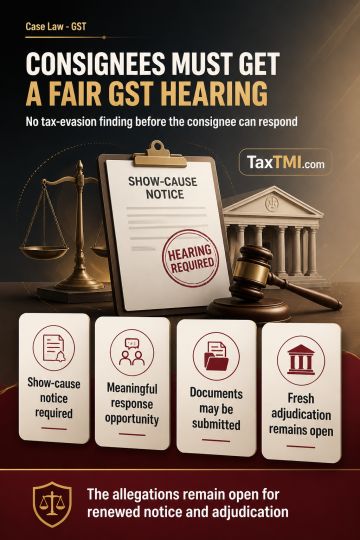
Post-death GST liability permits fresh proceedings against legal representatives, while discontinued-business recovery remains limited to the inherite...
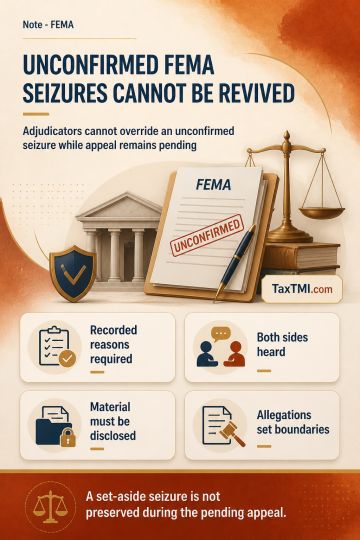
Non-confirmation of FEMA seizure prevents adjudicators from overriding pending appellate findings on recorded reasons and suspected foreign asset hold...
The NCLAT upheld the Adjudicating Authority's order directing liquidation of the Corporate Debtor, dismissing the appeal. It reaffirmed that under Section 30(4) of the IBC, post-amendment, approval of a resolution plan requires not less than 66% of the voting share of all Financial Creditors, inclusive of those voting for, against, or abstaining. The Tribunal clarified that the percentage cannot be computed solely based on votes cast at the meeting or presence of particular creditors, as the statutory language mandates calculation based on the entire voting share of Financial Creditors. The omission of Regulation 2(1)(f) was held inconsequential to this interpretation. The decision aligns with the Supreme Court's interpretation that CIRP Regulations must be read in harmony with Section 30(4). The delay in adjudication did not vitiate the liquidation order, and the appeal was accordingly dismissed.
The NCLAT upheld the Adjudicating Authority's order directing liquidation of the Corporate Debtor, dismissing the appeal. It reaffirmed that under Section 30(4) of the IBC, post-amendment, approval of a resolution plan requires not less than 66% of the voting share of all Financial Creditors, inclusive of those voting for, against, or abstaining. The Tribunal clarified that the percentage cannot be computed solely based on votes cast at the meeting or presence of particular creditors, as the statutory language mandates calculation based on the entire voting share of Financial Creditors. The omission of Regulation 2(1)(f) was held inconsequential to this interpretation. The decision aligns with the Supreme Court's interpretation that CIRP Regulations must be read in harmony with Section 30(4). The delay in adjudication did not vitiate the liquidation order, and the appeal was accordingly dismissed.
Note: It is a system-generated summary and is for quick reference only.
 TaxTMI
  TaxTMI