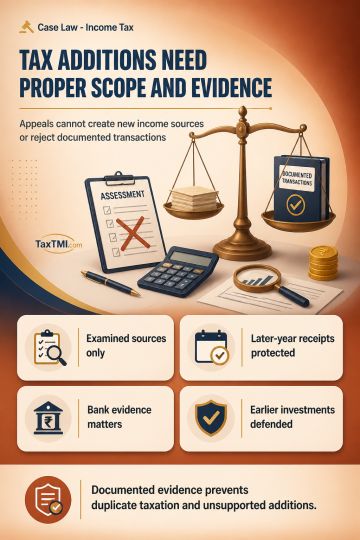
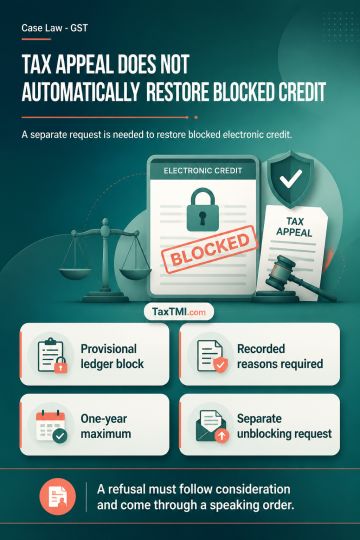
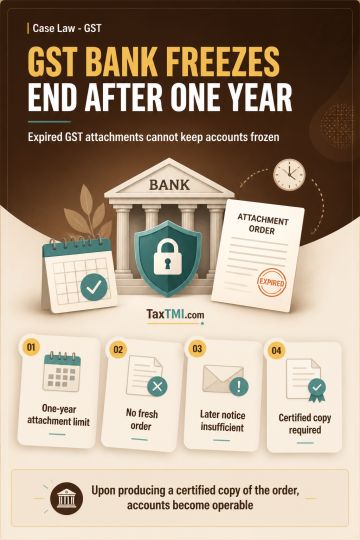
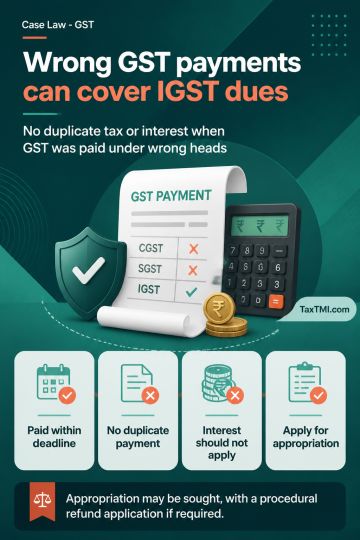
Appellate enhancement limits protect against new income sources, while documented credits and prior-year investments resist unexplained-income additio...
Capital-gains exemption for charitable trusts extends to qualifying fixed deposits, while unrecoverable TDS write-offs may constitute income applicati...
Page of 4868
Press 'Enter' after typing page number.
1 to 20 of 97344 Results
❮
❯
❯❯
0 / 200
Expand Note
Add to Folder
No Folders have been created
+
Are you sure you want to delete "My most important" ?
The HC dismissed the writ petition challenging the notice issued for fraudulent availment of Input Tax Credit (ITC) involving four suppliers, with the petitioner as a recipient. The Court held that writ petitions are generally not maintainable in cases of alleged fraudulent ITC claims and emphasized that the petitioner must pursue remedies through the prescribed appellate process. The Court noted that the impugned order is appealable and the petitioner's grievances can be addressed before the Appellate Authority. Consequently, the petition was disposed of, reinforcing the principle that disputes concerning fraudulent ITC claims should be resolved via statutory appeal mechanisms rather than writ jurisdiction.
The HC dismissed the writ petition challenging the notice issued for fraudulent availment of Input Tax Credit (ITC) involving four suppliers, with the petitioner as a recipient. The Court held that writ petitions are generally not maintainable in cases of alleged fraudulent ITC claims and emphasized that the petitioner must pursue remedies through the prescribed appellate process. The Court noted that the impugned order is appealable and the petitioner's grievances can be addressed before the Appellate Authority. Consequently, the petition was disposed of, reinforcing the principle that disputes concerning fraudulent ITC claims should be resolved via statutory appeal mechanisms rather than writ jurisdiction.
Note: It is a system-generated summary and is for quick reference only.
 TaxTMI
  TaxTMI