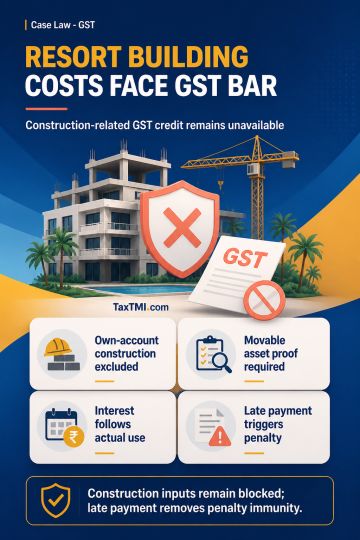
Blocked input tax credit for resort construction remains unavailable; interest follows actual utilisation, while delayed payment attracts statutory pe...
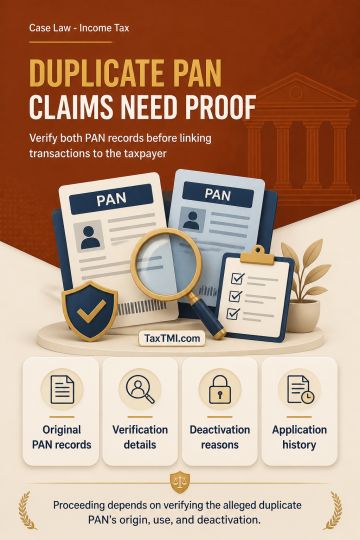
Duplicate PAN allocation requires record verification and deactivation reasons before assessment-related transactions can be attributed to an assessee...
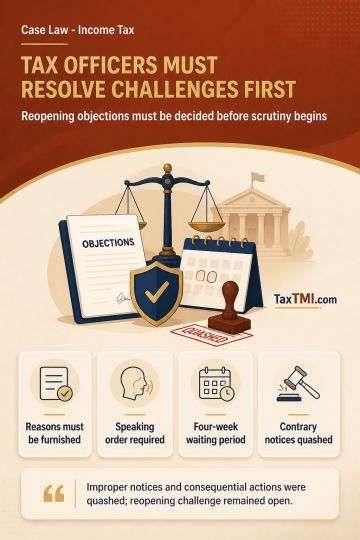
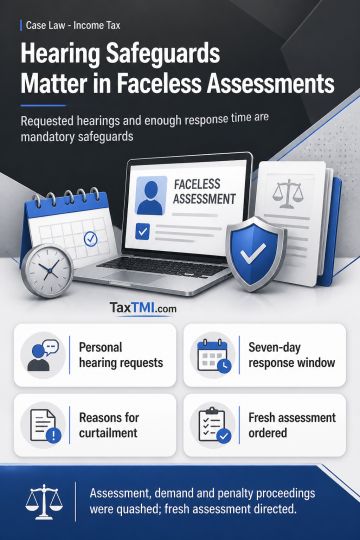
Faceless assessment safeguards require requested personal hearings and adequate final show-cause response time, failing which reassessment is required...
The HC held that the authorities erred by focusing solely on ancillary documents without examining the substantive evidence regarding the movement of goods or verifying compliance with statutory ITC conditions. Although the supplier was later deregistered, their registration was valid at the relevant time, and the revenue failed to conclusively determine whether the supplier had fulfilled GST obligations or whether the petitioner was entitled to claim the input tax credit. The court emphasized the necessity of assessing the supplier's tax payment status as a critical factor in ITC eligibility. Consequently, both the original and appellate authorities failed to discharge their statutory duties properly. The petition was allowed, and the impugned demand for ineligible ITC, along with interest and penalty, was set aside.
The HC held that the authorities erred by focusing solely on ancillary documents without examining the substantive evidence regarding the movement of goods or verifying compliance with statutory ITC conditions. Although the supplier was later deregistered, their registration was valid at the relevant time, and the revenue failed to conclusively determine whether the supplier had fulfilled GST obligations or whether the petitioner was entitled to claim the input tax credit. The court emphasized the necessity of assessing the supplier's tax payment status as a critical factor in ITC eligibility. Consequently, both the original and appellate authorities failed to discharge their statutory duties properly. The petition was allowed, and the impugned demand for ineligible ITC, along with interest and penalty, was set aside.
Note: It is a system-generated summary and is for quick reference only.
 TaxTMI
  TaxTMI