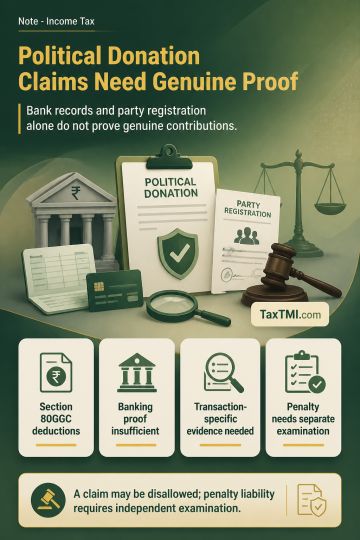
Political contribution deductions require genuine transactions; banking records and party registration alone cannot defeat evidence of accommodation e...
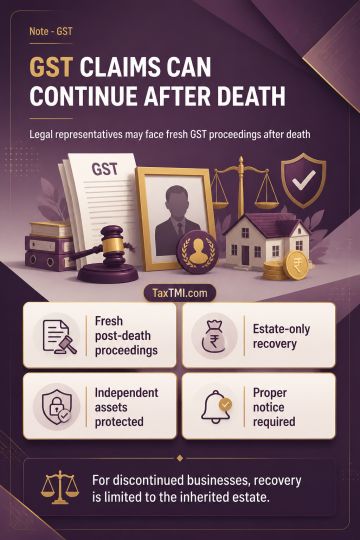
Post-death GST liability permits fresh proceedings against legal representatives, while discontinued-business recovery remains limited to the inherite...
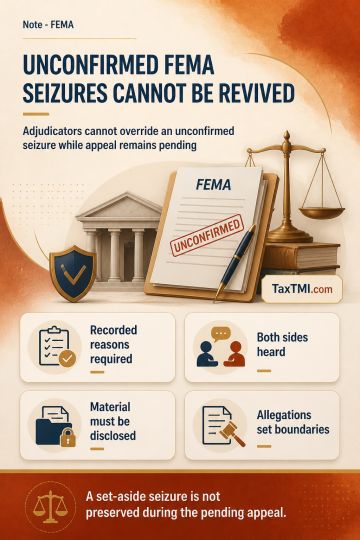
Non-confirmation of FEMA seizure prevents adjudicators from overriding pending appellate findings on recorded reasons and suspected foreign asset hold...
The ITAT allowed the taxpayer's appeal regarding disallowance of short-term capital loss on share sale. The tribunal held that oral agreements between family members deserve equal credibility and mere deficiencies in ROC records cannot justify treating transactions as sham without additional evidence. The court emphasized that strong suspicion cannot substitute for evidence supporting the assessee's claim. The tribunal ruled that the onus lies on Revenue to prove apparent transactions are not genuine, rather than requiring taxpayers to prove legitimacy of properly documented share sales with consideration movement. The disallowance was reversed and capital loss claim was accepted.
The ITAT allowed the taxpayer's appeal regarding disallowance of short-term capital loss on share sale. The tribunal held that oral agreements between family members deserve equal credibility and mere deficiencies in ROC records cannot justify treating transactions as sham without additional evidence. The court emphasized that strong suspicion cannot substitute for evidence supporting the assessee's claim. The tribunal ruled that the onus lies on Revenue to prove apparent transactions are not genuine, rather than requiring taxpayers to prove legitimacy of properly documented share sales with consideration movement. The disallowance was reversed and capital loss claim was accepted.
Note: It is a system-generated summary and is for quick reference only.
 TaxTMI
  TaxTMI