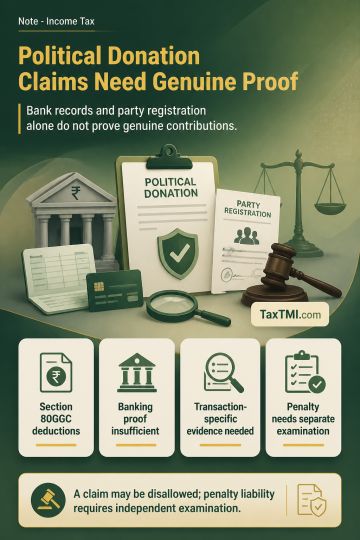
Political contribution deductions require genuine transactions; banking records and party registration alone cannot defeat evidence of accommodation e...
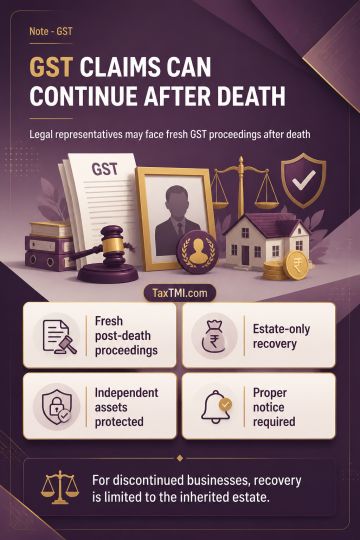
Post-death GST liability permits fresh proceedings against legal representatives, while discontinued-business recovery remains limited to the inherite...
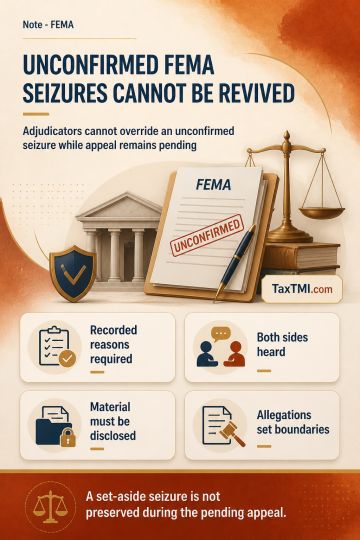
Non-confirmation of FEMA seizure prevents adjudicators from overriding pending appellate findings on recorded reasons and suspected foreign asset hold...
HC determined that Entertainment Tax Subsidy (ETS) received by the assessee from state governments constitutes a capital receipt, not revenue. The subsidy was aimed at encouraging multiplex theatre development in capital-intensive sectors. The court's reasoning aligned with prior SC precedent in Chaphalkar Brothers Pune, which established similar principles regarding subsidies. The ruling effectively resolved the dispute by classifying the ETS as a capital receipt, thereby providing favorable treatment for the assessee's tax implications related to subsidies received for multiplex infrastructure development across multiple states.
HC determined that Entertainment Tax Subsidy (ETS) received by the assessee from state governments constitutes a capital receipt, not revenue. The subsidy was aimed at encouraging multiplex theatre development in capital-intensive sectors. The court's reasoning aligned with prior SC precedent in Chaphalkar Brothers Pune, which established similar principles regarding subsidies. The ruling effectively resolved the dispute by classifying the ETS as a capital receipt, thereby providing favorable treatment for the assessee's tax implications related to subsidies received for multiplex infrastructure development across multiple states.
Note: It is a system-generated summary and is for quick reference only.
 TaxTMI
  TaxTMI