Personal liberty safeguards restrict arrest after court-directed GST appearance, requiring interim release where authorities overreach pending proceed...
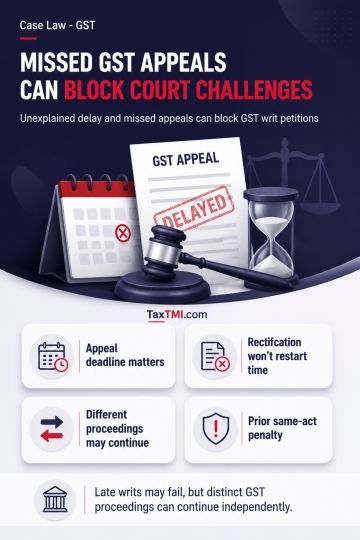
Alternative statutory remedy and delay bar GST writ challenges despite pending rectification, while distinct subject matter permits parallel proceedin...
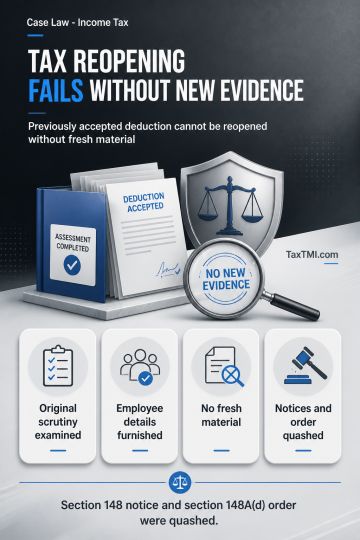
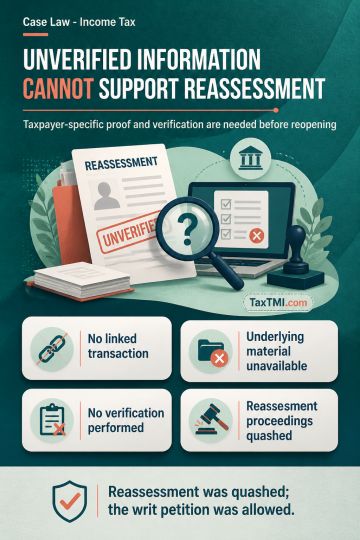
Unverified Insight Portal Information Cannot Justify Reassessment Without a Verified Taxpayer-Specific Income-Escape Nexus or Demonstrated Application...
Assessing Officer jurisdiction after statutory transfer invalidates reassessment notices issued by transferor officers and nullifies resulting proceed...
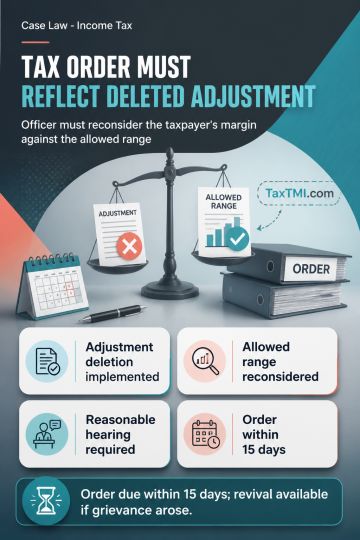
Consequential appeal-effect orders must implement rectification deleting working-capital adjustments and reconsider the resulting arm's-length range c...
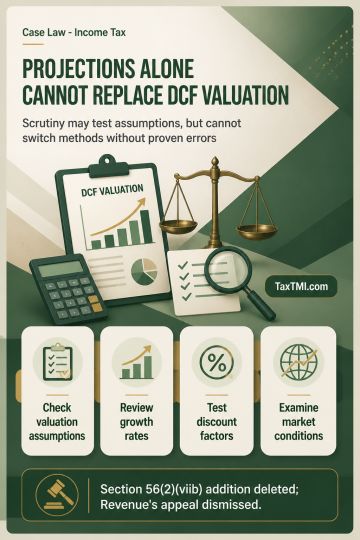
Discounted cash flow valuation protects share premium where projections are reasonable, while audited book expenses defeat unexplained-expenditure add...
The proposed Income Tax Bill 2025 maintains established principles for income taxation of spouses governed by Portuguese Civil Code in Goa, Dadra and Nagar Haveli, and Daman and Diu. Under Clause 10, spousal income is not assessed as community property despite the "communiao dos bens" concept. Non-salary income is equally apportioned between spouses and included separately in their respective total incomes. Salary income remains exclusively attributed to the earning spouse. The provision retains core principles from Section 5A of Income Tax Act 1961 while introducing structural improvements through simplified language and clearer sub-clauses. This ensures continued tax equity while potentially enhancing implementation efficiency for couples under Portuguese Civil Code jurisdiction.
The proposed Income Tax Bill 2025 maintains established principles for income taxation of spouses governed by Portuguese Civil Code in Goa, Dadra and Nagar Haveli, and Daman and Diu. Under Clause 10, spousal income is not assessed as community property despite the "communiao dos bens" concept. Non-salary income is equally apportioned between spouses and included separately in their respective total incomes. Salary income remains exclusively attributed to the earning spouse. The provision retains core principles from Section 5A of Income Tax Act 1961 while introducing structural improvements through simplified language and clearer sub-clauses. This ensures continued tax equity while potentially enhancing implementation efficiency for couples under Portuguese Civil Code jurisdiction.
Note: It is a system-generated summary and is for quick reference only.
 TaxTMI
  TaxTMI