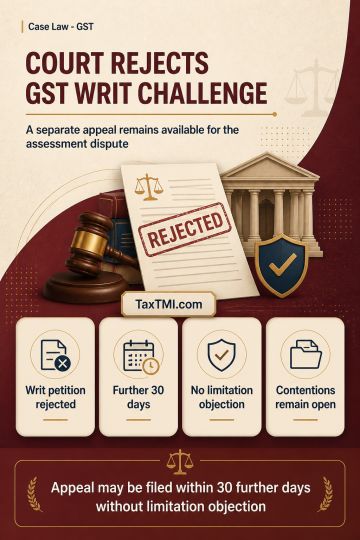
Alternate statutory remedy governs GST assessment challenge, with statutory appeal preserved and limitation objection barred for the permitted filing ...
CESTAT ruled that extended limitation period under Section 73(1) of Finance Act was not applicable as appellant disclosed Cenvat credit in ST3 returns, showing no willful suppression of facts. Revenue failed to establish fraud, collusion, or intent to evade service tax payment. While appellant erred in credit availment, the error was inadvertent as registration occurred only in September 2013. Mandatory penalties were not sustainable absent extended period invocation. Court distinguished from GAIL case where deliberate misclassification constituted tax evasion strategy. Entire demand being beyond normal limitation period was set aside, leaving merits unexamined. Appeal allowed due to lack of deliberate evasion intent.
CESTAT ruled that extended limitation period under Section 73(1) of Finance Act was not applicable as appellant disclosed Cenvat credit in ST3 returns, showing no willful suppression of facts. Revenue failed to establish fraud, collusion, or intent to evade service tax payment. While appellant erred in credit availment, the error was inadvertent as registration occurred only in September 2013. Mandatory penalties were not sustainable absent extended period invocation. Court distinguished from GAIL case where deliberate misclassification constituted tax evasion strategy. Entire demand being beyond normal limitation period was set aside, leaving merits unexamined. Appeal allowed due to lack of deliberate evasion intent.
Note: It is a system-generated summary and is for quick reference only.
 TaxTMI
  TaxTMI










 Join Channel


