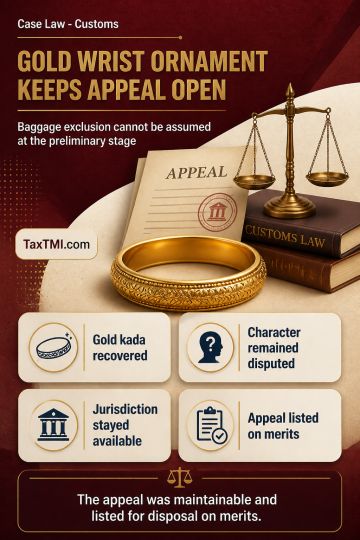
Appellate jurisdiction remains available where a wrist-worn gold ornament cannot conclusively be characterised as imported baggage at the preliminary ...
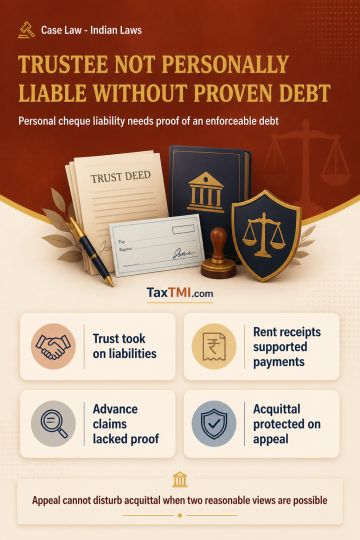
Written complaint requirement bars cognizance on police reports for securities offences, while unsupported breach of trust and cheating allegations fa...
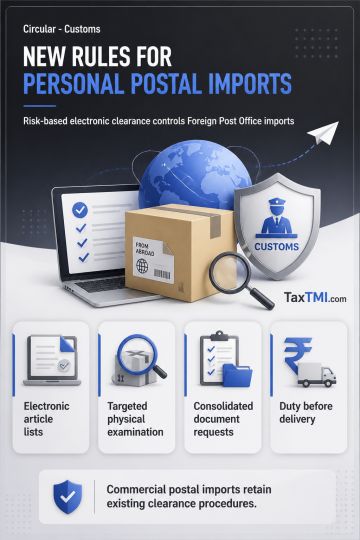
Risk-based postal import clearance standardises electronic assessment, document requests, duty realisation and delivery controls at Foreign Post Offic...
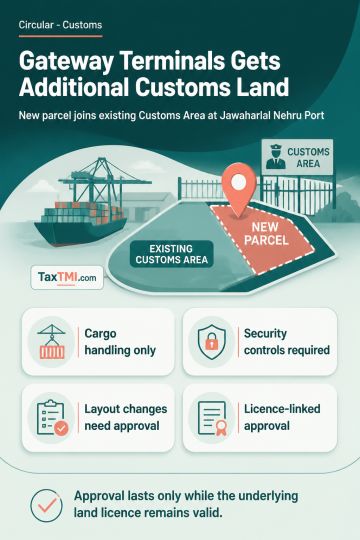
Customs Cargo Service Provider appointment extends custodianship to additional terminal land, subject to cargo-control, security and licence condition...
The central issue revolved around whether the movement of goods from manufacturing units in Rajasthan to depots in Bihar and Jharkhand constituted inter-state supply of goods or inter-state stock transfers. The key points are: Transfer of goods from head office to branch cannot be treated as sale in interstate trade since a head office cannot trade with itself. A sale requires transfer of property in goods from seller to buyer for a price, while an agreement to sell involves future transfer subject to conditions. Inter-state sale attracting central sales tax occurs when sale/agreement to sell occasions movement of goods across states. Under the liquor policy, the Corporation is the wholesaler, and manufacturers submit documents like Master Agreement for supplying beer. The Corporation issues Order for Supply (OFS) based on stock requirements but has no obligation to procure minimum quantities. Delivery deviating from OFS is not acknowledged. The Master Agreement cannot be treated as an agreement to sell, being merely a standing order/tender. The movement of goods from Rajasthan to Bihar/Jharkhand was not occasioned by any sale agreement but was merely inter-state stock transfer by appellants to their own depots. Hence, central sales tax is not leviable on such movements.
The central issue revolved around whether the movement of goods from manufacturing units in Rajasthan to depots in Bihar and Jharkhand constituted inter-state supply of goods or inter-state stock transfers. The key points are: Transfer of goods from head office to branch cannot be treated as sale in interstate trade since a head office cannot trade with itself. A sale requires transfer of property in goods from seller to buyer for a price, while an agreement to sell involves future transfer subject to conditions. Inter-state sale attracting central sales tax occurs when sale/agreement to sell occasions movement of goods across states. Under the liquor policy, the Corporation is the wholesaler, and manufacturers submit documents like Master Agreement for supplying beer. The Corporation issues Order for Supply (OFS) based on stock requirements but has no obligation to procure minimum quantities. Delivery deviating from OFS is not acknowledged. The Master Agreement cannot be treated as an agreement to sell, being merely a standing order/tender. The movement of goods from Rajasthan to Bihar/Jharkhand was not occasioned by any sale agreement but was merely inter-state stock transfer by appellants to their own depots. Hence, central sales tax is not leviable on such movements.
Note: It is a system-generated summary and is for quick reference only.
 TaxTMI
 of 4803




 Join Channel


 TaxTMI
