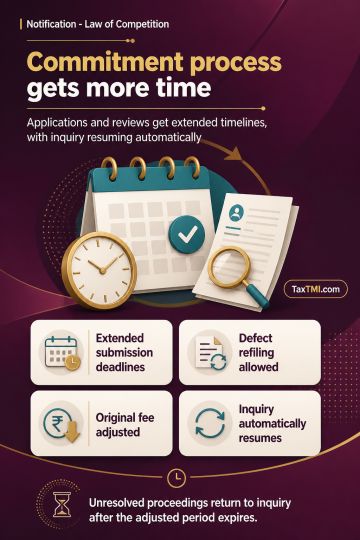
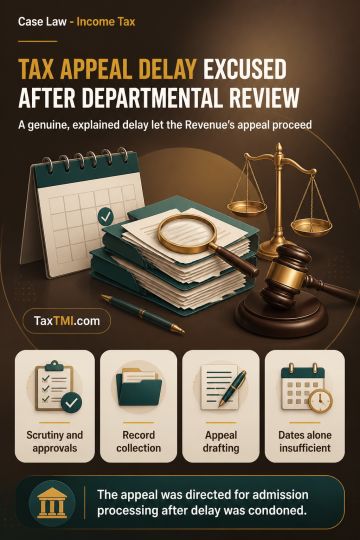
Commitment proceedings gain extended timelines, structured defect refiling, and automatic resumption of inquiry after the adjusted completion period e...
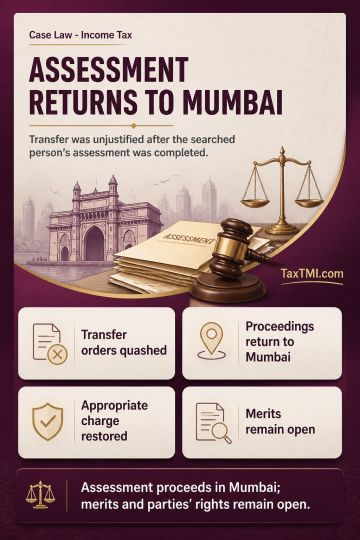
Centralised assessment transfer becomes unwarranted once the searched person's assessment is complete, requiring restoration to the appropriate charge...
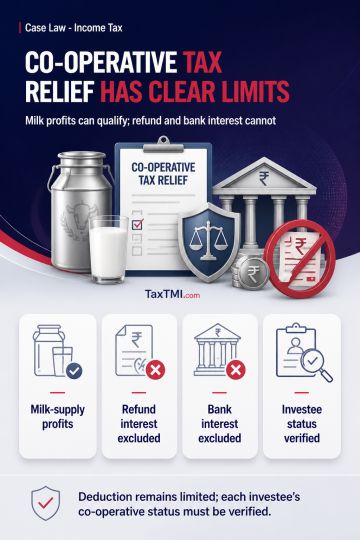
Co-operative deduction eligibility excludes refund and commercial-bank interest, while qualifying co-operative investments require entity-wise verific...
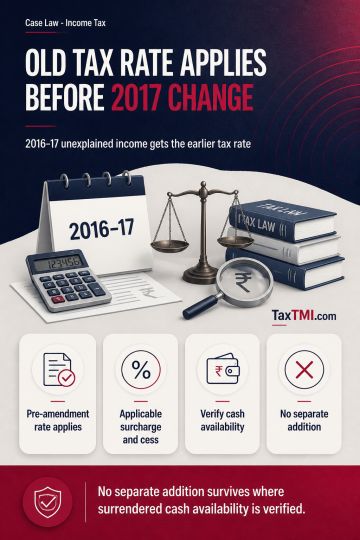
Enhanced tax rate on surrendered unexplained income applies prospectively, while cash-deposit telescoping requires verification of available surrender...
Page of 4800
Press 'Enter' after typing page number.
1 to 20 of 96000 Results
❮
❯
❯❯
0 / 200
Expand Note
Add to Folder
No Folders have been created
+
Are you sure you want to delete "My most important" ?
The Madhya Pradesh High Court examined the scope of judicial review u/s 212(1)(c) of the Companies Act, 2013 regarding the Central Government's sanction for an investigation by the SFIO. The court held that SFIO investigation on transactions already addressed u/s 66 of the IBC would amount to double jeopardy. It emphasized the necessity of public interest for such investigations and found no such element in this case. The court noted that the company's functions were halted due to CIRP and pending liquidation, indicating no public interest or prima facie case for the investigation. The court ruled the sanction as arbitrary, illegal, and lacking a reasoned order, thus setting it aside and quashing any actions taken based on it.
The Madhya Pradesh High Court examined the scope of judicial review u/s 212(1)(c) of the Companies Act, 2013 regarding the Central Government's sanction for an investigation by the SFIO. The court held that SFIO investigation on transactions already addressed u/s 66 of the IBC would amount to double jeopardy. It emphasized the necessity of public interest for such investigations and found no such element in this case. The court noted that the company's functions were halted due to CIRP and pending liquidation, indicating no public interest or prima facie case for the investigation. The court ruled the sanction as arbitrary, illegal, and lacking a reasoned order, thus setting it aside and quashing any actions taken based on it.
Note: It is a system-generated summary and is for quick reference only.
 TaxTMI












 Join Channel


 TaxTMI