PMLA anticipatory bail requires satisfaction of twin conditions, while predicate-offence protection does not extend to independent money-laundering pr...
School-affiliation charges remain taxable where not directly connected with examinations, while extended limitation requires proof of deliberate tax e...
Concessional penalty for search-disclosed unreconciled jewellery applies where substantive disclosure conditions are met despite omission from origina...
Page of 4826
Press 'Enter' after typing page number.
1 to 20 of 96510 Results
❮
❯
❯❯
0 / 200
Expand Note
Add to Folder
No Folders have been created
+
Are you sure you want to delete "My most important" ?
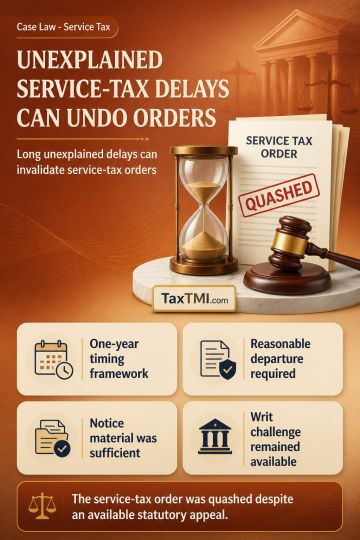
Section 73(4B)(b) requires service-tax adjudication, where possible, within one year when the extended period is invoked. The qualification permits only a reasonable and legally justifiable departure, not an unrestricted power to keep a show-cause notice pending for an inordinate period. Where the notice material enabled adjudication and no adequate explanation existed, representations or claimed adjournments could not justify prolonged delay. Unexplained delay rendered the adjudication arbitrary, contrary to Section 73(4B)(b) and Article 14, leading to quashing of the service-tax order. Availability of a statutory appeal did not bar writ jurisdiction because the challenge raised a legal question and involved arbitrary adjudication.
Section 73(4B)(b) requires service-tax adjudication, where possible, within one year when the extended period is invoked. The qualification permits only a reasonable and legally justifiable departure, not an unrestricted power to keep a show-cause notice pending for an inordinate period. Where the notice material enabled adjudication and no adequate explanation existed, representations or claimed adjournments could not justify prolonged delay. Unexplained delay rendered the adjudication arbitrary, contrary to Section 73(4B)(b) and Article 14, leading to quashing of the service-tax order. Availability of a statutory appeal did not bar writ jurisdiction because the challenge raised a legal question and involved arbitrary adjudication.
Note: It is a system-generated summary and is for quick reference only.
 TaxTMI
  TaxTMI














 Join Channel