We've upgraded AI Search on TaxTMI with two powerful modes:
1. Basic • Quick overview summary answering your query with references• Category-wise results to explore all relevant documents on TaxTMI
2. Advanced • Includes everything in Basic • Detailed report covering: - Overview Summary - Governing Provisions [Acts, Notifications, Circulars] - Relevant Case Laws - Tariff / Classification / HSN - Expert views from TaxTMI - Practical Guidance with immediate steps and dispute strategy
• Also highlights how each document is relevant to your query, helping you quickly understand key insights without reading the full text.Help Us Improve - by giving the rating with each AI Result:
Cases where this provision is explicitly mentioned in the judgment/order text; may not be exhaustive. To view the complete list of cases mentioning this section, Click here.
Provisions expressly mentioned in the judgment/order text.
<h1>High Court: Used car sales by chemical manufacturer not taxable under Sales Tax Act. Fixed assets sales not included.</h1> The High Court ruled that the sales of three used motor cars by the assessee, who was primarily in the business of manufacturing chemicals, were not ... Definition of 'business' for sales-tax purposes - dealer as person carrying on business of buying or selling goods - taxability of sale of fixed assets or discarded goods - transactions incidental or ancillary to main business - burden on revenue to prove dealer status in respect of particular goods - continuity, frequency, volume and profit-motive as indicia of carrying on businessDefinition of 'business' for sales-tax purposes - taxability of sale of fixed assets or discarded goods - dealer as person carrying on business of buying or selling goods - Whether sales of three used motor cars by the assessee were taxable as sales made by a 'dealer' under section 3 read with clauses (11) and (5A) of section 2 of the Bombay Sales Tax Act, 1959 - HELD THAT: - The court held that liability under the Act arises only where a person is a 'dealer' in the goods the sale of which is sought to be included in taxable turnover; being a dealer in one commodity does not, without more, make him a dealer in every commodity he sells. The Supreme Court decision in State of Gujarat v. Raipur Manufacturing Co. Ltd. establishes that sales of fixed assets or discarded goods acquired in the course of business do not ordinarily make the seller a dealer in those goods and are not includible in taxable turnover unless there is evidence of intention to carry on business in those goods, typically shown by volume, frequency, continuity and profit-motive. The insertion of clause (5A) (defining 'business' to include transactions in connection with or incidental or ancillary to the main business) only enlarged the scope to bring within turnover transactions that are demonstrably connected with or incidental/ancillary to the main business; it does not nullify the Raipur ratio that sales of fixed assets or discarded goods are not, by that fact alone, part of the main business. Applying these principles to the facts, sale of used or discarded cars (capital assets) by the assessee, a manufacturer and seller of chemicals, were not sales in connection with or incidental or ancillary to the assessee's main business of manufacturing and selling chemicals. Consequently such sales cannot be included in the taxable turnover of the dealer under the Act for the period in question. [Paras 7, 9, 14]Sales of the three used motor cars were not taxable as sales by a dealer within the meaning of section 3 read with clauses (11) and (5A) of section 2 of the Bombay Sales Tax Act, 1959Final Conclusion: Reference answered in the negative; the Tribunal's confirmation of tax on the sale of the three used motor cars is set aside and the matter is decided in favour of the assessee. Issues Involved:1. Taxability of sales of used motor cars by the assessee under section 2(5A) of the Bombay Sales Tax Act, 1959.2. Interpretation and application of the definition of 'business' u/s 2(5A) of the Act.3. Relevance of the Supreme Court's decision in State of Gujarat v. Raipur Manufacturing Co. Ltd. [1967] 19 STC 1 post the amendment of section 2(5A).Summary:Issue 1: Taxability of Sales of Used Motor CarsThe primary question was whether the Tribunal was justified in confirming the levy of tax on the sales of three used motor cars by the assessee, who was a manufacturer of chemicals and not a dealer in motor cars. The Tribunal had held the sales taxable, considering them incidental or ancillary to the assessee's business. However, the High Court concluded that the sales of used or discarded cars by the assessee did not amount to sales by a dealer within the meaning of section 3 read with clauses (11) and (5A) of section 2 of the Bombay Sales Tax Act, 1959. The Court emphasized that such sales were not part of or incidental to the main business of manufacturing and selling chemicals.Issue 2: Interpretation of 'Business' u/s 2(5A)The Court analyzed the definition of 'business' u/s 2(5A) of the Act, which includes any trade, commerce, or manufacture and any transaction incidental or ancillary to such activities. The Court held that the definition did not nullify the principles laid down by the Supreme Court in Raipur Manufacturing Co. [1967] 19 STC 1. Specifically, the sale of fixed assets or discarded goods acquired in the course of business cannot be considered transactions incidental or ancillary to the main business of manufacturing and selling chemicals.Issue 3: Relevance of Supreme Court's DecisionThe Court extensively referred to the Supreme Court's decision in Raipur Manufacturing Co. [1967] 19 STC 1, which established that a person must carry on the business of selling a commodity before the turnover from the sale of that commodity is taxable. The Court reaffirmed that the principles from this decision remain relevant despite the amendment of section 2(5A). The Court noted that the legislative intent was not to levy tax on all sales made by a dealer but only on sales connected with or incidental to the business of selling goods.Conclusion:The High Court answered the reference in the negative, holding that the sales of the three used motor cars by the assessee were not taxable under the Bombay Sales Tax Act, 1959, as they were not incidental or ancillary to the assessee's main business of manufacturing and selling chemicals. The Court made no order as to costs.
 TaxTMI
 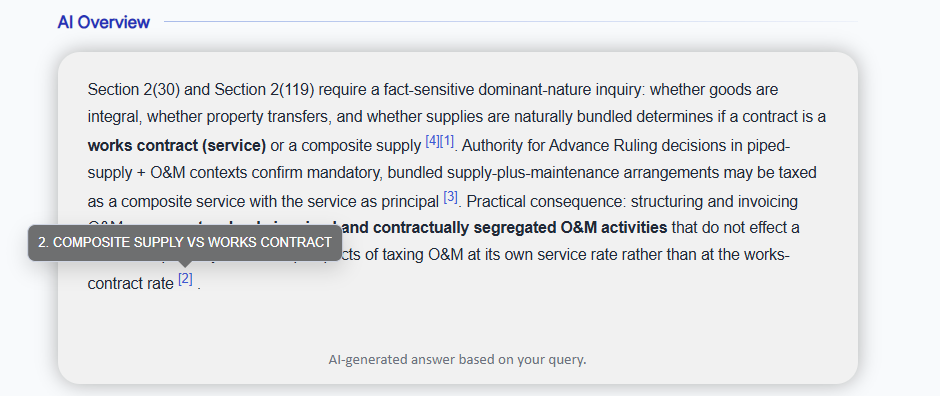 • Category-wise results to explore all relevant documents on TaxTMI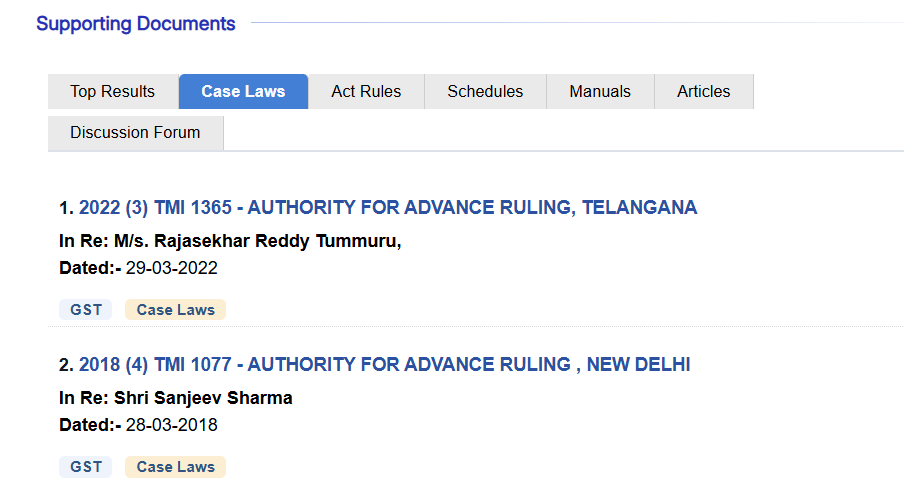
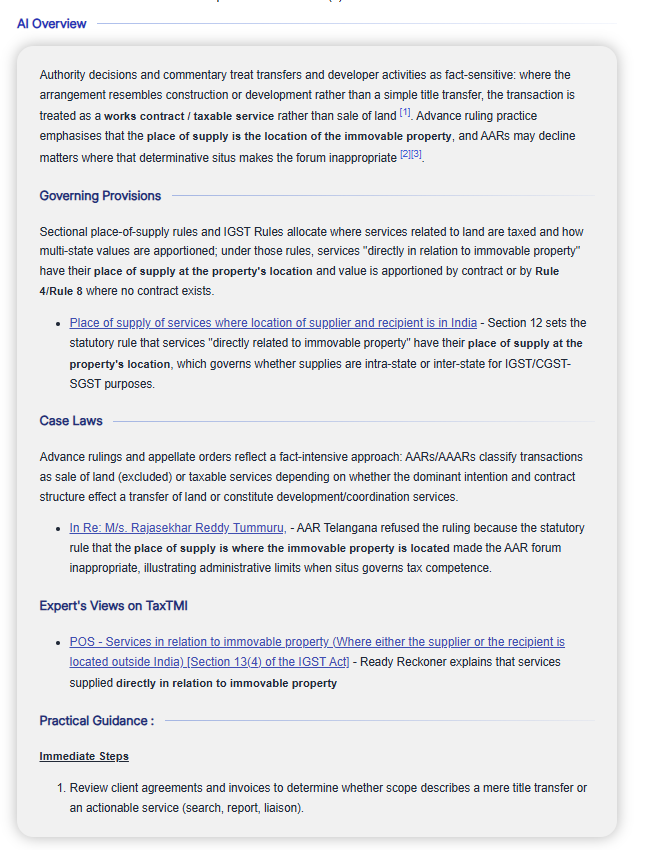 Help Us Improve - by giving the rating with each AI Result:
 TaxTMI
 TaxTMI


